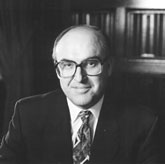
I’ve now developed a headache so I thought I would share!

The case against the notion of historical objectivity is like the case against international law, or international morality; that it does not exist.
Sir Isaiah Berlin

Berlin was a philosopher and a political theorist.

I have a very vague recollection of some of his ideas, but from memory, the most interesting one was his dismissal of the idea that there was only one sort of right answer, or universally “correct” system of ethics.  He was not talking about the physical world we inhabit, which can to some extent be defined by science or mathematics, but rather the inter-reaction of human beings which cannot be determined, or categorised using the same “rules”.

His work was naturally influenced by events at the time; the fight against Communism and Fascism, but one does wonder what he would have made of the present battle of ideologies.

It would also be interesting to see how future historians view these present conflicts, and which ethical values will they use to do so, but I doubt any of us will be around to find out.

Counter-factual History.

What might have been had the Romans developed the steam engine? By the late 3rd century AD, all of the essential elements for constructing a steam engine were known to Roman engineers: steam power – Hero’s aeolipile, the crank and connecting rod mechanism in the sawmills and marble quarries, the cylinder and piston in metal force pumps, non-return valves in water pumps and gearing in water mills and clocks. Suppose that the Roman Empire emerged, as it did, from the crisis of the third century with all its administrative and military institutions changed, bureaucratic, rigid, and constantly geared for war, with its capital no longer in Rome but in Constantinople – and with steam power. (Such a development might have occurred not in Italy, but in the Eastern Empire – the stirrup was first put into wide use there, and reserves of coal and other minerals are available without deep mining in, for example, Dacia, Moesia and Thracia – present-day Romania and Bulgaria.)

Hosted by imgur.com

What might have been

On This Day – 30th May 1381

On the 30th of May 1381, a chief tax-collector went to Fobbing in Essex to levy the second installment of the third Poll Tax. He was told in no uncertain terms where he could go, and the villagers refused to pay. This incident is seen as the starting point of the Peasants’ Revolt of 1381.

Much has been written about this tax; it is said that it was onerous, that it was inequitable and that there was widespread evasion. Poll taxes were certainly ‘new and novel’, and, like all new taxes, were designed to ensure that those who did not normally contribute to taxation did so in future.

Continue reading “On This Day – 30th May 1381”

Had I but known: Araminta, philistine, encounters Jon Vickers.

My thanks to Zen for his earlier post,  Opera, my real musical love..

Now I have to confess that I am not a great opera fan, but do enjoy some of the better known arias or should that be arie! Alas, when I was younger, I was rather more interested in the Beatles, or occasionally Bach.

Zen’s post reminded me of something I have not thought of in years, and took me on an interesting trip around cyperspace to solve the puzzle.

When I was at a loose end in my early twenties, I worked in a rather splendid country house hotel; not so much as a career move, because I hadn’t actually decided on a career, but more to help out  family friends.

One of the guests was an opera singer who was singing at Covent Garden, he preferred the peace and quiet to unwind after his performances and disliked staying in London hotels. He also enjoyed his food and the hotel restaurant was quite well-known nationally and internationally. All I could recall was that he was Canadian and his Christian name was Jon.   Continue reading “Had I but known: Araminta, philistine, encounters Jon Vickers.”

On This Day – 12th of May 1994

John Smith

On the 12th of May 1994, Labour Leader, John Smith, died in St Bartholomew’s hospital in London after two serious heart attacks.

I don’t know very much about this man, since I had already left England by this time. But, I understand that he had a reputation for being a man of integrity, and was respected for his honesty and decency by those from all political persuasions. He was, so the sources say, expected to lead Labour to victory at the next general election and become prime minister.

John Smith was, as is well known, succeeded by Tony Blair who, whatever his reputation in 1994, left office with a soiled reputation and little respect from the electorate.

Continue reading “On This Day – 12th of May 1994”

On This Day – 23rd April 303

According to tradition, Saint George was beheaded in Nicomedia near Lydda in Palestine on the 23rd of April 303.

George is one of the most venerated saints in the Roman Catholic, the Anglican, the Eastern Orthodox, the Oriental Orthodox , and the Eastern Catholic Churches.  He is the patron saint of Aragon, Catalonia, England, Ethiopia, Georgia, Greece, Lithuania, Palestine, Portugal, and Russia, as well as the cities of Amersfoort, Beirut, Fakiha, Bteghrine, Cáceres (Spain), Ferrara, Freiburg, Genoa, Ljubljana, Gozo, Milan, Pomorie, Preston, Qormi, Rio de Janeiro, Lod, Barcelona and Moscow.

It is generally agreed that George was born in Cappadocia, in what is now Turkey, sometime between 275 and 281. Some believe that both his parents were Christians.

George enlisted into the Cavalry of the Roman Army at about the age of 17, during the reign of the Emperor Diocletian. He quickly reached the rank of Tribune in the Imperial Guard stationed at Nicomedia.

Continue reading “On This Day – 23rd April 303”

For Boadicea: The Belgrave Hospital for Children

Browse the estate agents around SE11 and you’ll soon find adverts for smallish flats in Belgrave House. At 1 Clapham Road, it’s handy for the tube at the Oval, and even handier  for St Mark’s if you are a churchgoer. Pretty well placed for fans of Surrey County Cricket Club and the England team as well.

It’s a big imposing building with a high gable, mullioned windows, and it’s made of red brick with mosaics around the entrance. Even if you didn’t know the names Charles Holden or Percy Adams, you’d soon realise that Continue reading “For Boadicea: The Belgrave Hospital for Children”

Murder and Queensland University

Patrick Mayne

Patrick Mayne was born in Cookstown, County Tyrone, in about 1824. Patrick left his native Ireland and arrived in Australia in 1841. By 1846 he was in Moreton Bay, Queensland, working as a butcher at the boiling down works, Kangaroo Point. Moreton Bay is about 45 km north of Brisbane, and in 1841 was still a penal colony and a pretty rough place.

In 1848 a group of men, including Mayne and a sawyer called Robert Cox, were drinking in a hotel called the Bush Inn. Cox had just been paid £350 for a load of cedar and everyone knew that he had that money.  Patrick and a few of his friends returned to the inn after mid-night to find Cox and were told that he was drunk and had left.
The next morning, a man rowing up the river at 7 a.m. saw the legs and loins of a man floating in the water. It took another hour to find the upper part of the body in long grass. Eventually the head was found, propped up so it would look at whoever found it – and then, horror upon horrors, the entrails were found draped over the well behind the hotel. It probably was Brisbane’s most bizarre murder. The cook from the hotel was arrested for the theft of the money and the murder, tried, convicted and hung.