
Doing the decent thing

So the Eurozoners are chipping another cool £110 bn. into the Greek pot – which is almost certain to be p*ssed away within a few years. At least that’s the view of the ‘markets’ this morning. Put another way, the neighbours have now subbed every Greek about £18,000 to zero effect so far. So why did the paymasters stump up?

Probably because they don’t want to wear the black hat. “We did everything we could, but the Greeks blew it,” they’ll say before long. Better than refusing charity and being blamed for the demise of a friend.

Is it? I wonder. Isn’t being nice to Greeks the same as being mean to the rest of the Europopulation? No contest then.
The Pogey

This post was initiated as a result of a recent one by Araminta commenting on the use (or misuse)  by Tesco of a “back to work” program in Britain.  It reflects only one person’s experience of the system  employed here and I make no claim that such system is more effective than those used elsewhere, however it is different.


The Pogey


The Pogey, the Dole, or as my old dad used to say the Parish.  “If you don’t watch out son you’ll be on the Parish” that’s how old he was, and back then that’s who supported you, if anyone did, the charity of the parish.

I was on the parish once, in the US, it was 1998, I was 54 and it was the middle of winter.   The company I had been working for since 1984 declared bankruptcy, just like that, in February.  The whole operation, about two hundred people, was closed down and a trustee brought in to liquidate the assets. There was no severance pay or golden, silver, tin or lead handshakes, no pensions or settlements just pay-to-date and goodbye. Continue reading “The Pogey”

What’s so bad about extinction?

Just to put this into context: I’m much closer to extinction than I was 69 years ago. That’s life. Or in this case, death. So, musing as one does now and then about the transitoriness of this mortal coil, I wonder why the goody goodies of this world persist in lamenting the natural passing of everything they can shake a stick at!

If they could, they’d repopulate our crowded countryside with dinosaurs, woolly mammoths and giant stinging nettles. As if we didn’t have enough to worry about.

And now they even think they can save all of the 7,000 surviving languages – as if there is any lasting value in being able to say hi in Anishinaabemowin or Early Outer Mongolian.

Come on, guys. Spend your tax income on something else. Like educating aborigines. (Sorry, I couldn’t resist it.)

Entente cordiale or wha’?

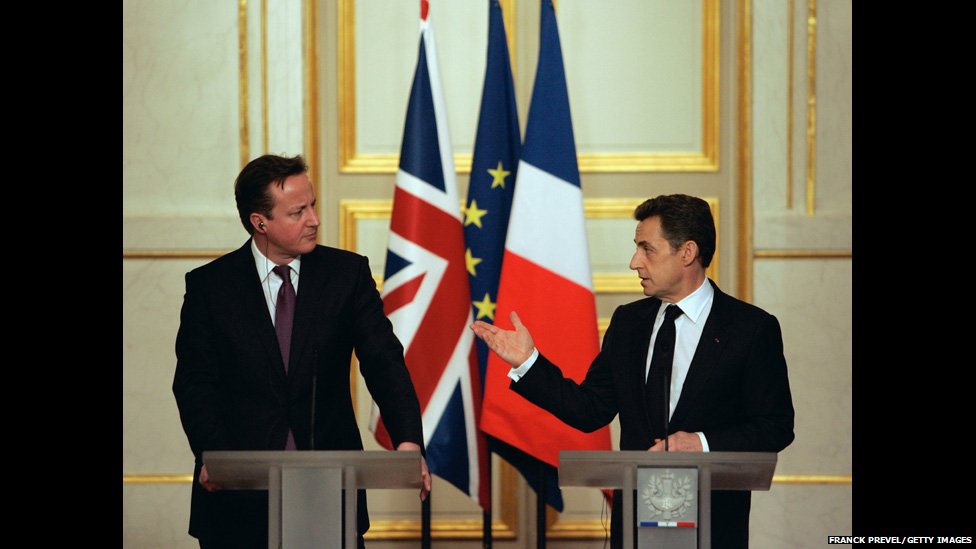
Politics is always good for a larf. The ink is hardly dry on France’s vituperative propaganda against the UK’s protection of its sovereignty and its ‘City’, when suddenly the excess of sweetness and light is enough to induce chronic nausea. Maybe Bismarck was right: politics really is only the art of the possible. But I wonder if it is also the art of selective amnesia.

A caption or two wouldn’t come amiss either.

The wages of sin?

Sorry to hog the page, but some things get my goat.

Does anybody here think we or anybody else knows what really happened when Meredith Kercher died? No. Nor me. So why on earth does any civilised judicial system allow Amanda Knox to make megabucks on a ‘very thoughtful, reflective and serious book’ deal with a respectable publisher?

Some things are worth raving about.

http://www.bbc.co.uk/news/world-us-canada-17069980

Græcia delenda est

I’m borrowing a thought from the insightful Ambrose Evans-Pritchard (to name but a few!) in today’s DT, where he describes the German proposals for Greece as ‘Carthaginian’. (Google, if you will.) The point is that when Carthage lost to Rome in 146 BC (3 – 0) the ensuing ‘peace’ settlement was unforgiving and ruinous. (Not unlike Man Utd’s moral defeat of Liverpool after Suarez-gate.)

The facts indicate that since Greece has never been able to implement any plan involving the collection of taxes and control of its civil service, yesterday’s ‘approval’ by the Parliament is worth less than the paper the local Hansard will waste on recording it. If the Troika of money-lenders (sinners that they are) decides to drop further trillions down the Hellenic drain, it will precipitate revolution in Greece: a phenomenon which has relatively frequently been the result of any attempt at government there.

Better by far, if like a parent out of patience with a profligate teenager, the Troika says no. Then the Greeks can find out what their economy is worth, as opposed to what it costs the rest of Europe.

The Germans have a word for it

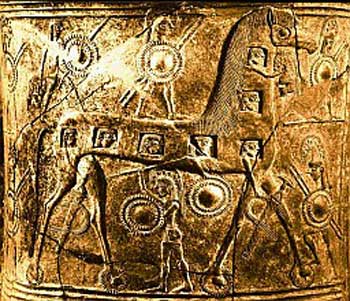
It’s Danaergeschenk, meaning a (suspicious) gift from the Greeks. Anybody who has holidayed in the Ægean archipelago will vouch for the locals’ charm and skill as hosts and caterers. And we usually give good old Homer the credit for pointing out the inherent danger in accepting their offerings. But as so often with Homer, that’s just another myth. No, not the bit about Greeks; the idea that Homer said it.

Vase 670 BC Continue reading “The Germans have a word for it”

Death by a thousand cuts

Allegedly Sarko himself is not subject to any such torture. His stratospheric grocery bills and zillion car garage bear witness. But last weekend he had to sit at home while his persecutor, Ms Merkel, arranged a Euro-strategy meeting for AAA-rated members only. A veritable ‘Not-you-Perkins!’ moment! How very dare she?

I do wish there was an English or even French word for Schadenfreude because this summer is going to be filled with it – except in France.

O frabjous day! Callooh! Callay!

The Minister for Bankrupting the Country is to be charged with perverting the course of justice, along with his ex-wife. For those that don’t know, Chris Huhne is, or rather was,  Minister for Energy and Climate Change , a post first held by King Canute, yes I know he was really only demonstrating to his courtiers that he no control over the weather, but hoi polloi think he was trying to turn the tides back :-). Continue reading “O frabjous day! Callooh! Callay!”

Gentlemen vs. Players

Cricket in the 18th Century

Like many cherished colleagues I was brought up with a cricket ball in my cradle, ready for my inevitable success as a player. My Dad was a mean swing bowler and played for Armstrong Siddeley every fine summer Saturday, while Mum was an official scorer, dotting and crossing in all the right boxes. My sister and I soon learned how to do it and waved back to the umpire whenever required.

At more rarified altitudes than ours, the game was socially divided between amateurs and professionals: gentlemen and players – until 1962 when Fiery Fred Trueman (a player of course) referred to it as a ‘ludicrous business…thankfully abolished’. But the distinction had reflected the long history of cricket as a social catalyst. Or was it?

The Beeb had an article only yesterday on that very idea. http://www.bbc.co.uk/news/magazine-16821779. Romantic and salutary apparently. But I wonder. I’m not convinced that peasants performing for the entertainment of their betters (!) represented anything but an expression of the feudal order. Fraternity, Equality and Liberty it wasn’t! Didn’t the gentlemen and players have separate dressing rooms? Or am I mis-remembering?