
They’re definitely out to get me, you know. I can’t think why. It’s disabled people, mostly. Continue reading “Paranoia I”
Celtic, Keltic, Seltic ? ? ?

A little help here please, with the Ryder Cup starting later this week Celtic Manor is obviously in the news a little, all are pronouncing it ‘Keltic’ (with a hard ‘K’), I later hear a football report from Scotland and the exact same word is pronounced ‘Seltic’ (with an ‘S’), why?
Did you know… Continue reading “Celtic, Keltic, Seltic ? ? ?”
Casual denigration of the Right
I read in today’s paper that Riz Ahmed, an actor, had “shocked” a cinema audience by introducing the film Taxi Driver with the words, “The original film inspired the assassination attempt of Ronald Reagan. So, you never know, tonight’s screening might inspire someone to shoot David Cameron. We can only hope.” The actor, 27, apparently apologised afterwards, and said that his remark was intended as a joke – “Comedy is about taking risks and seeing the silly side to serious situations.” Continue reading “Casual denigration of the Right”
A visionary on acid?
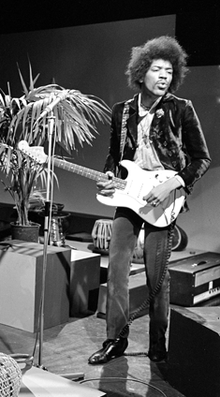
Excuse me while I kiss the sky.
Jimi Hendrix
Goodnight everyone, sleep well.
Discrimination is Good
If I may presume to advise the new leader of the Labour party, he must remember that he has to pursue socialist goals within a capitalist framework. That places serious limitations on what can be achieved. In my view, it would be a mistake either to confront capitalism head on, or to embrace it unreservedly.
While it would be futile to ask for the abandonment of egalitarianism in a social context, he is most likely to achieve socialist goals by doing just that in dealing with a capitalist economy. In the economic sphere, discrimination is good. He must learn to discriminate in taxation and employment policy, favouring manufacturing and small business.
Even America, the vault of capitalism, is learning that when Nigel Lawson discounted the importance of manufacturing, he was talking nonsense. There is no possibility of service industries, high tech developments or entrepreneurial opportunities providing employment opportunities on the scale that manufacturing does for the poorly educated or unskilled population. Therefore, if you are to help the people who look to Labour as their champion, it makes sense to discriminate in favour of manufacturing.
By the same logic, you should favour the small business, and discriminate in favour of the small entrepreneur. Big organisations have two drawbacks as far as your socialist objectives are concerned: they use advancing technology to cut costs, and headcounts, and they dominate markets, so preventing small firms from competing. Hypermarkets, for example, invariably take business away from small shops, often turning the high street into a commercial desert.
It simply does not make sense, in terms of socialist objectives, to apply laws generally to big and small alike, treating the employer of, say, a dozen people, as if the firm was a commercial giant, lumbering the small firm with bureaucratic tasks that it can ill afford.
I suggest that discrimination on the lines mentioned here is necessary to the self-sufficiency of many. The alternative may be an ever increasing dependency on benefit handouts.
A great loss
Jimi Hendrix – Purple Haze
That’s the problem, right there.
Two items in today’s newspaper illustrate perfectly the problem we face as citizens* in our own countries today. First, there’s this in which;
the Prime Minister makes clear his intention to “give something back” from a stronger economy.
Later on we find this where we learn that
Lord Mandelson is still paid £8,600 a month by the EU despite leaving his Brussels post two years ago and earning hundreds of thousands in royalties from his memoir…
CLT20 – we like it

It’s crunch time in the competition, our local lads have performed magnificently to qualify for today’s semi-final against the Aussie outfit from Adelaide up in Pretoria.
Guess what’s at stake?
Foot in mouth – 8

To the President of Nigeria, dressed in traditional robes ‘You look like you’re ready for bed!
By popular request.
First, the why-do-we-bother. First and foremost it’s a business requirement. We protect our brand reputation just like any other brand owner. We produce products that our consumers like and build brand loyalty by ensuring product quality. If a consumer has a bad experience with one of our products, he’s likely to chuck it and switch to a competitor. Secondly, our product is consumed. You know what is in a genuine product – no matter what you might think of the dread habit, think chocolate bars, or baby milk powder if it helps, the principles are the same – but as you will have seen, if the product is produced in filthy conditions in an abandoned chicken farm… Thirdly, counterfeits cut into our sales – it is unfair competition. and there’s more
 Boadicea's Chariot
You must be logged in to post a comment.