On the 7th of April 1739, Dick Turpin, highwayman, was hanged at York. Some articles on the internet give the date as the 10th or even the 19th of April. However, the account of his trial shows that he was tried on the 22nd of March 1739 and executed on Saturday the 7th of April. No messing around with ‘Appeals’ in those days…
Richard Turpin was baptised on the 21st of September 1705 in Hempstead, Essex. He was the son of John Turpin, a small farmer and some-time inn-keeper. Dick was apprenticed to a butcher in Whitechapel, which then was still a village on the outskirts of London. He completed his apprenticeship, married and opened a butcher’s shop in Buckhurst Hill. Wiki says that Dick married an Elizabeth Millington, but the Newgate Calendar, published about 1760, gave the lady’s surname as Palmer. I rather think that Wiki is correct.
Today is the day after all the Easter egg scoffing and the big full-on lunches with family and friends that the newspaper foodie supplements dictate should be gastro-feasts.
So what more could you want than to mosey on down to England’s longest village green and watch people stuffing their faces, at considerable speed, with even more food – and not just ordinary food but hundreds of wiggly, slippery, grey baby eels?
Well for many years that was the tradition at Frampton-on-Severn in Gloucestershire.
Rosamund’s Green – nearly half a mile long – is bordered along one edge by the high walls of the Frampton Court estate where there were always springer spaniels wandering or lying around watching the world go by waiting for the next shooting gig. The only excitement one would usually see on the green was the village cricket match.
But on Bank Holiday Monday, just opposite the the Three Horseshoes pub, it was the venue for the annual Elver Eating Contest which was preceded by an Easter Bonnet parade and various Sausage Eating Contests. Continue reading “Another one bites the dust”
On the 3rd of April 1042 Edward the Confessor was crowned in Winchester.
Edward was born in about 1003. He was the oldest son of Ethelred II (The Unready) and his second wife, Emma sister of Richard II of Normandy. Ethelred’s name means ‘well advised’, while the epithet ‘Unready’ meant exactly the opposite – ‘ill advised’.
Sometimes, something or someone catches my attention and I would want to know more, much more. Don’t ask me why this particular lady caught my attention, but she did. She wasn’t English, although she visited England once. She was the third child and second daughter of Ferdinand of Aragon and Isabella of Castile, the Catholic Monarchs of Spain and the sister of Catherine of Aragon. She died in 1555 in a windowless room in the castle of Tordesillas. Her name was Juana.
Google Juana and you will find that she is known as Juana la Loca, the insane queen of Castile. I would refute that, and assert that she was the victim of powerful and ambitious men: her husband, Philip the Handsome, her father Ferdinand, and her son, Charles V Holy Roman Emperor.
Juana was born in 1479 in Toledo. Little is known of Juana’s childhood, she was too far removed from the throne to be given much importance. One chronicler said she was the only one of the family who lacked physical charm, whilst another said that she was the beauty of the family. They all noted her precocity and were unanimous in their praise of her intelligence. She outshone her siblings being especially gifted in languages and music. Isabella and Ferdinand delighted to show her talents to visitors, but it was obvious that she did not like such attention. She was, it is claimed, aloof, subject to moods, melancholia and drawn to solitude. Unlike the rest of her family who were prolific writers, none of Juana’s letters, if she wrote any, have survived. However, most of her recorded comments show a sharp-wit tinged with scepticism and an independence of mind. Continue reading “Juana Queen of Castile, Aragon, Sicily and Naples”
On the 24th of March 1603 Elizabeth I died at Richmond Palace. It was the eve of the annunciation of the Virgin Mary, an appropriate day for the Virgin Queen to die, and, according, to the Julian Calendar in use at the time, it was the last day of the year 1602.
In the late winter of 1602/3 Elizabeth was feeling unwell. She had caught a chill after walking out in the cold winter air, and complained of a sore throat as well as aches and pains. “I am not well” she declared, but refused the administrations of her doctors. She also refused to rest in bed and stood for hours on end, occasionally just sitting in a chair. Her condition became worse and her ladies-in-waiting spread cushions across the floor. She lay on the floor for nearly four days – mostly in complete silence and eventually grew so weak that when her servants insisted on making her more comfortable in her bed she was unable to argue. Contemporaries thought that she would have recovered had she fought against her illness, but she was did not want to. She was old, she was tired, and she was lonely. As her condition deteriorated, Archbishop Whitgift (her favorite of all her Archbishops of Canterbury) was called to her side, and the Queen clung tight to his hand. When he spoke to her of getting better, she made no response, but when he spoke to her of the joys of Heaven, she squeezed his hand contentedly. By this time she was beyond speech and could only communicate with gestures. She finally fell into a deep sleep from which she did not wake. Continue reading “On This Day – 24th March 1603”
I was opposed to the war then and I am still opposed to it.
I have no doubt that the ‘Verdict of History’ will find Bush, Blair and Howard guilty of Crimes Against Humanity, my only sorrow is that they will never stand trial in their lifetimes.
Please note that I have nothing but admiration and respect for the soldiers who were and still are being sent to fight and die in this war which was based on the lies and deceit of men who thought they were above the Will of their people.
It was always an obligation of Christianity to provide for the poor. With the loss of monasteries and other such institutions it became necessary for the State to intervene and provide for their welfare. In 1562, Justices of the Peace were authorised and empowered to raise compulsory funds for the relief of the poor who were put into different categories:
those who could work but would not: the idle poor.
They were to be whipped through the streets, publicly, until they learned the error of their ways.
those who would work but could not: the able-bodied or deserving poor.
They were to be given help either through outdoor relief or by being given work in return for a wage.
those who were too old, ill or young to work: the impotent or deserving poor.
They were to be looked after in almshouses, hospitals, orphanages or poor houses. Orphans and children of the poor were to be given a trade apprenticeship. Continue reading “When Will We Ever Learn”
Sometimes it is worth stopping to think how much more real things become when one knows, loves and cares about individual people caught up in some of the situations we are discussing on various internet sites.
I remember my anguish over the conflict in former Yugoslavia; we have friends who live there. We were close to their children and they have visited us often. In all the confusion of this war the lack of communication from this family was hard to bear. Continue reading “Do we Care?”
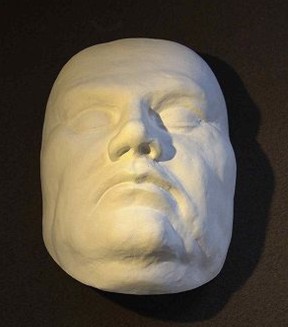
On the 18th of February 1546, Martin Luther died in Eisleben.
Now according to David Starkey (who was my tutor when I learnt all this stuff) Martin’s big problem was constipation, which made him extremely irritable – especially with indulgence sellers….



 On the 24th of March 1603 Elizabeth I died at Richmond Palace. It was the eve of the annunciation of the Virgin Mary, an appropriate day for the Virgin Queen to die, and, according, to the Julian Calendar in use at the time, it was the last day of the year 1602.
 On the 20th of March 2003 the US

 Boadicea's Chariot
You must be logged in to post a comment.