This Day – 4th February 1194

Richard IOn the 4th of February 1194 Richard I paid Henry IV, the Holy Roman Emperor, a ransom of 150,000 marks (£100,000) and was released from what was, by the standards of the time, illegal imprisonment.

Richard was born on the 8th of September 1157, he was the third son of Henry II and Eleanor of Aquitaine. It was never intended that the lands that Henry and Eleanor held between them would be left to one single heir, and Eleanor gave Richard Aquitaine when he was eleven and ensured that he was formally installed as the Duke in 1172 when he was sixteen. However, despite having autonomy in Aquitaine, Richard, with the aid of his father’s enemy the King of France, was more or less in constant rebellion against Henry until the latter’s death in 1189. Continue reading “This Day – 4th February 1194”
On This Day – 2nd February 1709

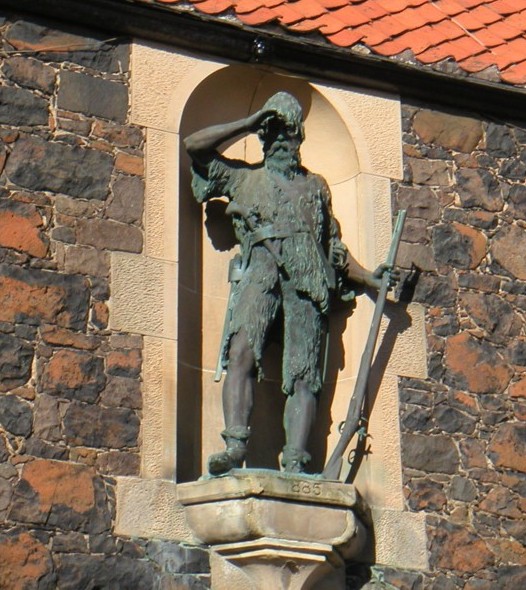
Alexander Selkirk

On the 2nd of February 1709, Alexander Selkirk (born Selcraig) was rescued from Juan Fernandez Island, now known as Robinson Crusoe Island.

Alexander was born in Lower Largo in 1676. He was the seventh son of the local shoemaker John Selcraig and Euphan Mackie. As a youngster he was so unruly that he was summoned before the Kirk Session for his “undecent carriage” . He took off to sea before the case was concluded.

Alexander enlisted in a privateering expedition led by Captains Dampier and Pickering whose intention was to profit from plundering the Spanish galleons and the rich Spanish colonies. Privateering expeditions were given approval by the government but were, in fact, little more than legalised piracy which was very profitable if the expeditions were successful. Alexander was a first class navigator and was appointed sailing master on the ninety ton vessel “Cinque Ports” which had sixteen guns and a crew of sixty three. Continue reading “On This Day – 2nd February 1709”

On This Day – 1st February 1587

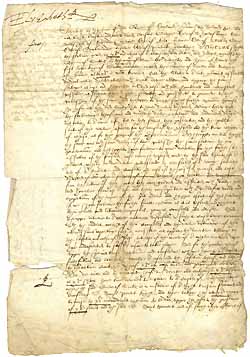
Warrant for Mary Queen of Scots Execution

On the 1st of February 1587, Elizabeth I, Queen of England, finally signed the death warrant for Mary Stuart, former Queen of Scots.

On the 19th May 1568, Mary landed at Workington in England. She had fled Scotland after an unsuccessful attempt to regain the throne that she had been forced to abdicate the previous year. Mary said that she sought the protection of  her cousin, Elizabeth, but she probably also hoped that Elizabeth would help her regain her crown.

There was a slight problem: Mary had previously claimed Elizabeth’s throne, a claim she refused to renounce, and was considered by some English Catholics to be the legitimate heir.  Mary was swiftly taken into custody and never released. Continue reading “On This Day – 1st February 1587”

On this Day – 31st January 1606

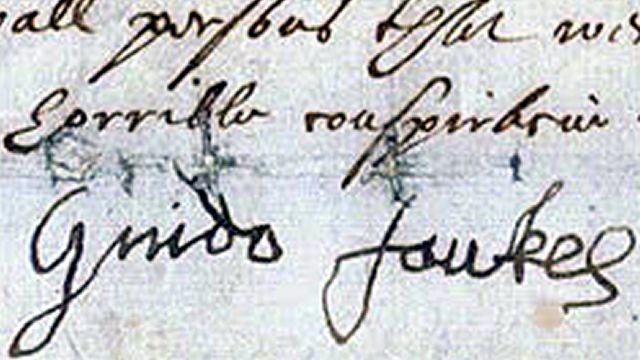
Guy Fawkes Signature on His Confession

On the 31st of January 1606, Guy Fawkes was taken from the Tower of London to the Garden of St Paul’s Cathedral, Westminster, where he was hung, drawn and quartered.

Guy Fawxe was born on the 13th of April 1570 and baptised on the 16th of April that years at Saint Michael-le-Belfrey, York. He was the only son of Edward Fawkes and Edith Blake. Edward was proctor of the ecclesiastical courts and advocate of the consistory court of the Archbishop of York.  Guy’s paternal grandmother was the daughter of a merchant, one time mayor of York. When she died in 1575 she left Guy her ‘best whistle and an angel of Gold’.

Guy went to St  Peter’s School in York, where possibly  John and Christopher Wright, both conspirators of the Gunpowder Plot, were also educated.  At St Peter’s, Guy was taught by John Pulleyn, who was a suspected Catholic. How much influence he may have had on Guy cannot be determined at this stage, but it is clear that Guy’s parents were staunch Protestants and brought their son up in that faith.

Edward Fawkes died intestate in 1579 and his property went to Guy.  Continue reading “On this Day – 31st January 1606”

On this Day – 30th January 1649

Execution of Charles I

On the 30th of January 1649, Charles Stuart, was beheaded at Whitehall, London.

Charles was the second son of  James VI (of Scotland) and James I (of England) and Anne of Denmark. He was born in Scotland in 1600 and was unable to walk or talk until he was three years old. Charles became heir to the throne in 1612 after his older brother, Henry, died of typhoid. He ascended the throne in 1625. Continue reading “On this Day – 30th January 1649”

On This Day 29th January 1820

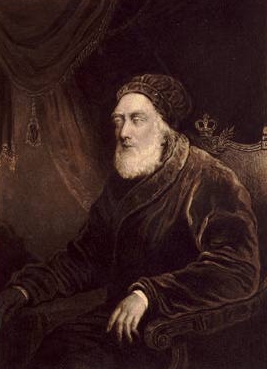
George III at the End of his Life

On the 29th of January 1820 George III, King of the United Kingdom of Great Britain and Ireland, died at Windsor.  He was born in  1738 and was the son of Frederick, Prince of Wales and Augusta of Saxe-Gotha.  He became heir to the throne when his father died in 1751, and succeeded  his grandfather, George II, in 1760. He married Charlotte of Mecklenburg-Strelitz in 1761, by whom he had 15  (troublesome!) children.

George was the first Hanoverian monarch to use English as his first language. He was also the first British monarch to study science systematically: chemistry, physics, astronomy, and mathematics.

George was determined to recover the prerogative lost to the ministerial council by the first two Georges, but bouts of madness and the way he handled the American Revolution eroded his support and the power of the Crown was granted again to the Prime Minister. Continue reading “On This Day 29th January 1820”

On This Day – 28th January 1547

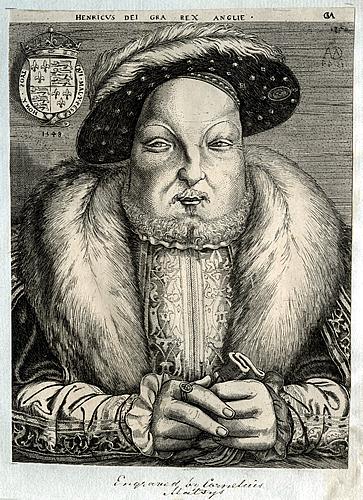
Henry VIII (Cornelis Metsys)

On the 28th of January 1547 Henry VIII of England died at Whitehall.

Henry had ruled England since 1509, and was only 55 when he died. He was certainly a prime candidate for NewLab’s  drive against obesity, however, one can just  imagine what he would have told them, had they dared to  mention his outrageous size!  It has long been known that Henry did not suffer from syphilis, but I was interested to read that it that he may well have suffered from Type 2 diabetes.

Much has been said about Henry’s marital adventures, but it should, perhaps, be remembered  that the succession wars, poetically named “The Wars of the Roses” , were  neither poetic nor brief. The first major battle was in 1455 and the final episode was the executions of Perkin Warbeck and Edward, Earl of Warwick, in 1499.   Continue reading “On This Day – 28th January 1547”

On This Day – 26th January 1788

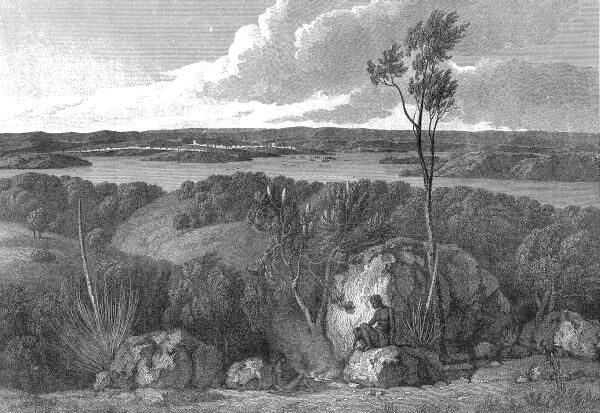
View of Port Jackson (Matthew Flinders)

On the 26th of January 1788, Captain Arthur Phillip planted the British flag at Port Jackson on what is now Sydney harbour.  Phillip had arrived with 11 ships comprising 732* convicts, marines and a handful of other officers. The holds were stuffed full of goodies that the Powers-That-Be in the UK thought would be necessary to establish a penal colony.

Contrary to popular belief this was not the first land-fall for the expedition, which had left England some eight months earlier. Following the advice of Joseph Banks, who had  been part of James Cook’s expedition, Phillip had been told to set up his colony at Botany Bay where he landed on the 18th of January. Having decided that the place was unsuitable, he decided to go elsewhere. Continue reading “On This Day – 26th January 1788”

On this Day – 25th January 1533

Anne Boleyn (Holbein)

January 25th 1533 is reputed to be the day that Henry VIII married Anne Boleyn. The wedding was held in secret – hardly surprising since Henry had not had a formal notification from the Pope that  his first marriage to Catherine of Aragon had been annulled!  A notification that Henry would never get, although the Pope had earlier suggested that Henry marry Anne without having his first marriage annulled. The wedding was necessary since it is clear that Anne was already pregnant with the future queen, Elizabeth I.

Anne was an extremely intelligent and beautiful young woman, she was also ambitious. She certainly set her sights higher than marriage to an Irishman in order to resolve a family dispute over the Earldom of Ormand.  But her attempt to marry Henry Percy, the son of the Earl of Northumberland was quashed, not because Henry VIII already had his eyes on her, but because Henry Percy was already betrothed and Anne was simply not of the right ‘class’ to marry into such an illustrious family. Continue reading “On this Day – 25th January 1533”