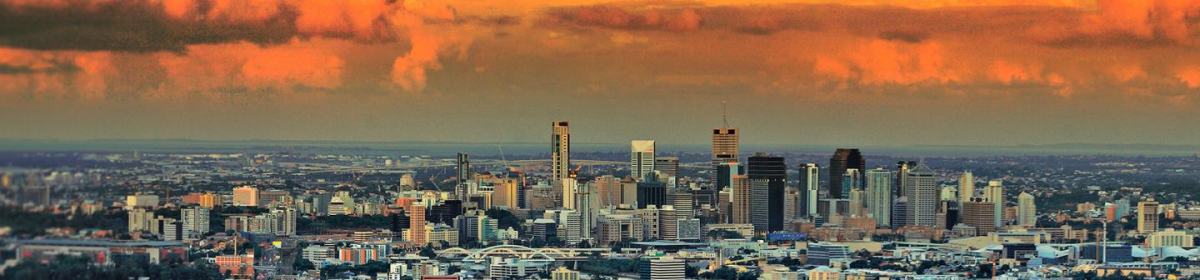
… with apologies for the sea ingress, it wasn’t my fault, honest.
Two weeks ago we spent a few days on Santorini, famed for its massive caldera. It was the eruption of circa 1500 BC that destroyed not just parts of Santorini but also the Minoan civilisation on neighbouring Crete.
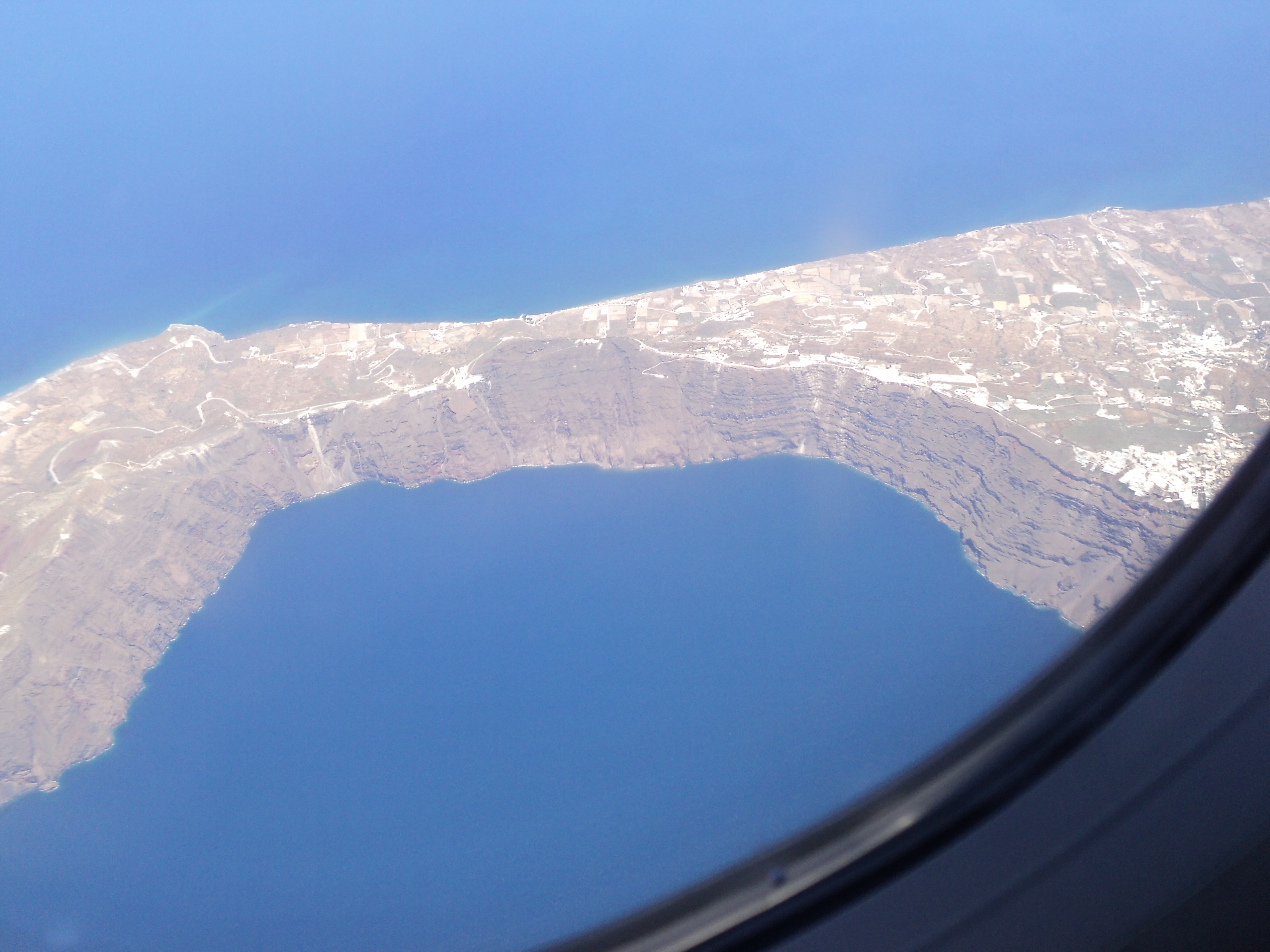
We had of course chosen a hotel perched on the edge of the cliff. The other side of the island is for beach holidays. We were greeted effusively by the hotel manager, in whose conversation the name Schauble was heard. We gathered that the German Finance Minister would never be welcomed there as a guest. 
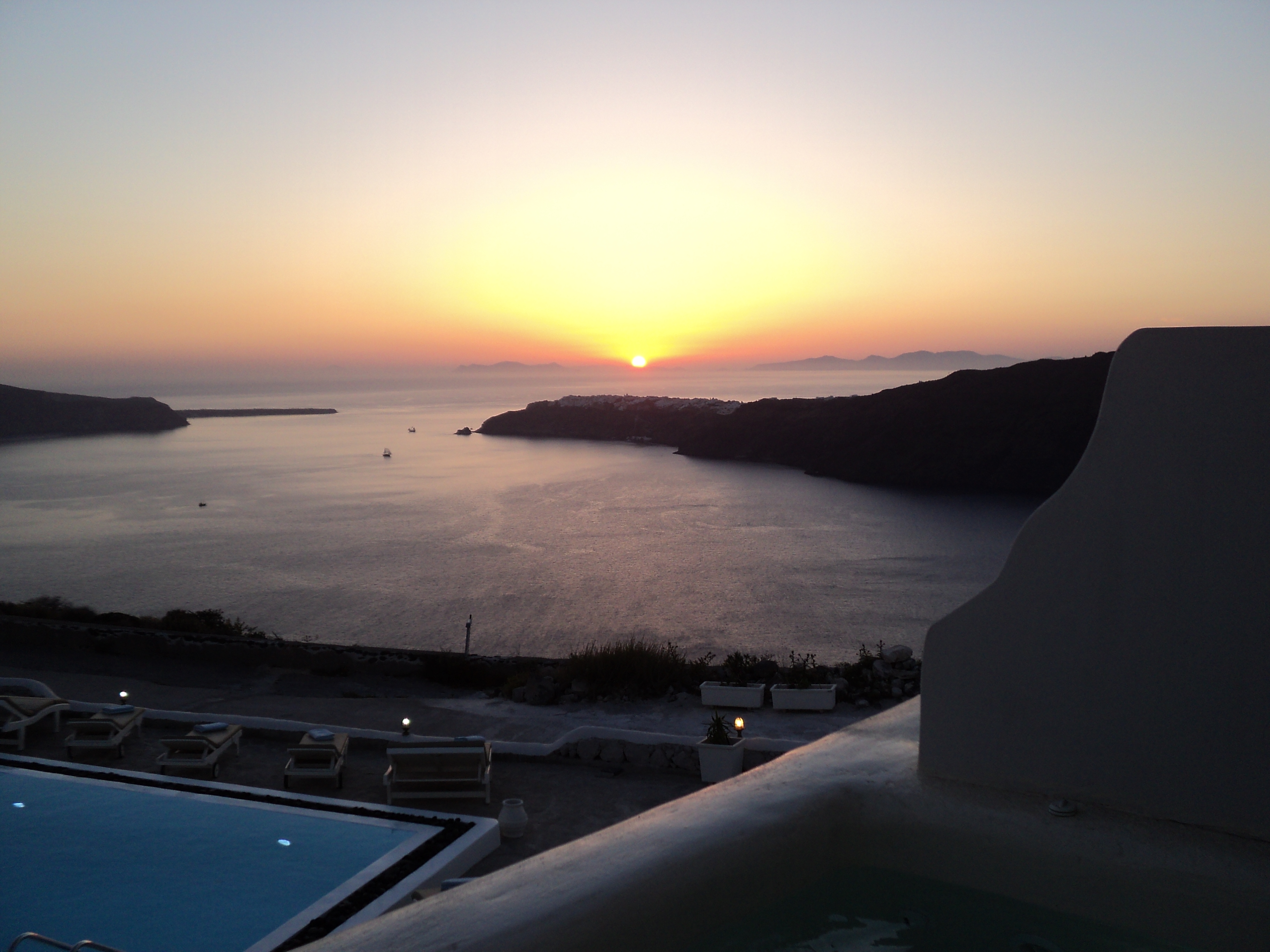
Two views from our balcony.
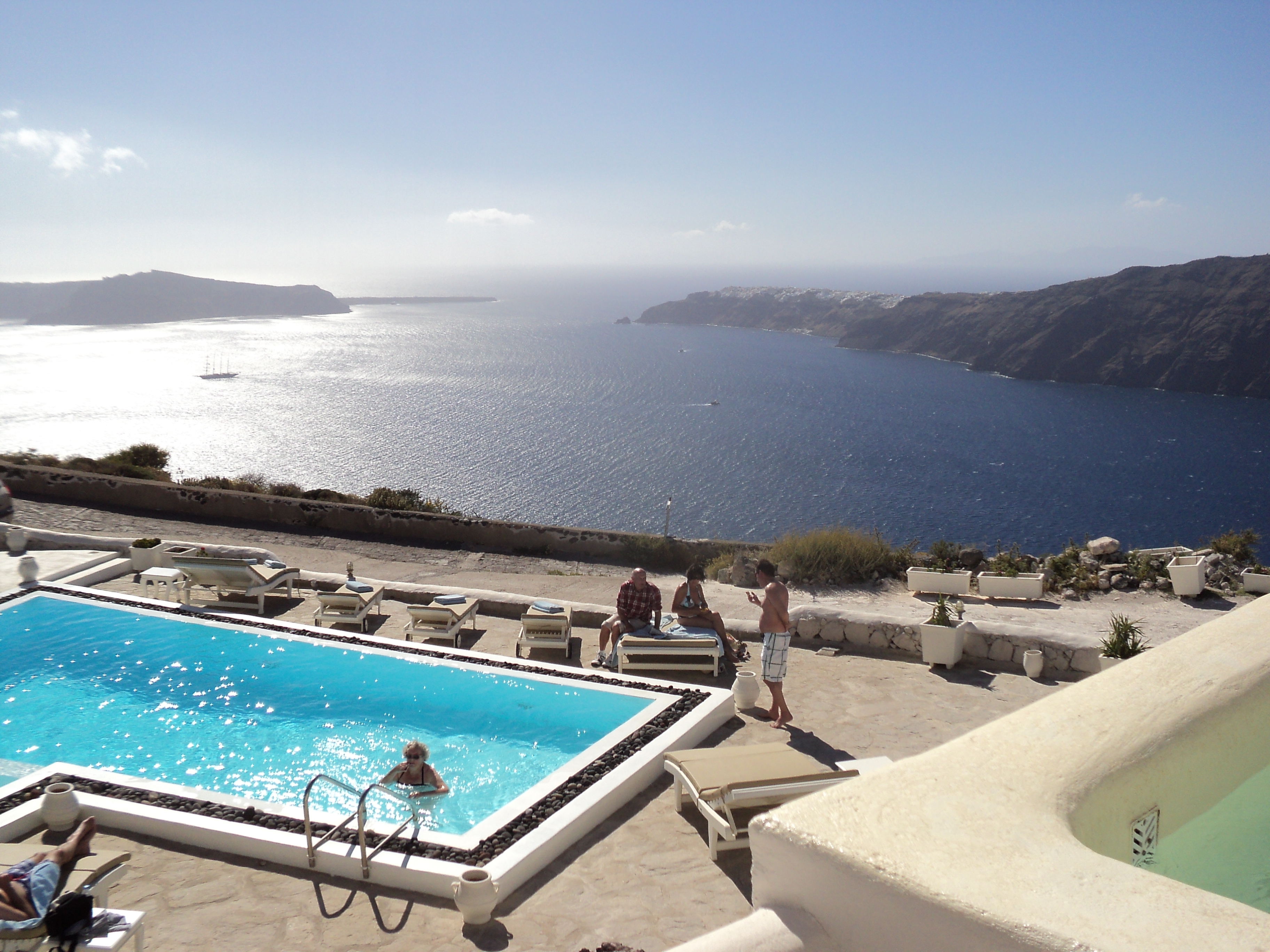
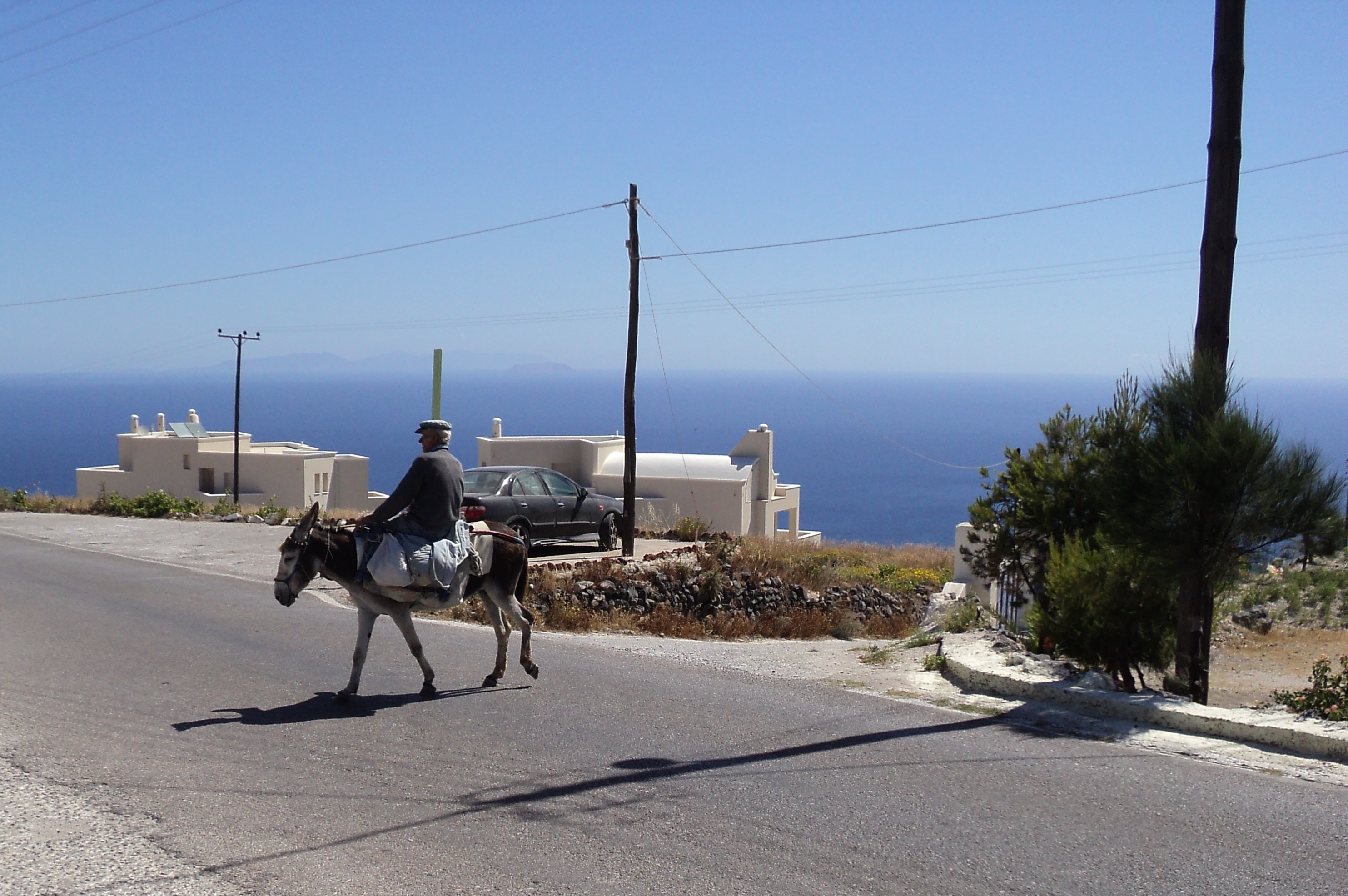
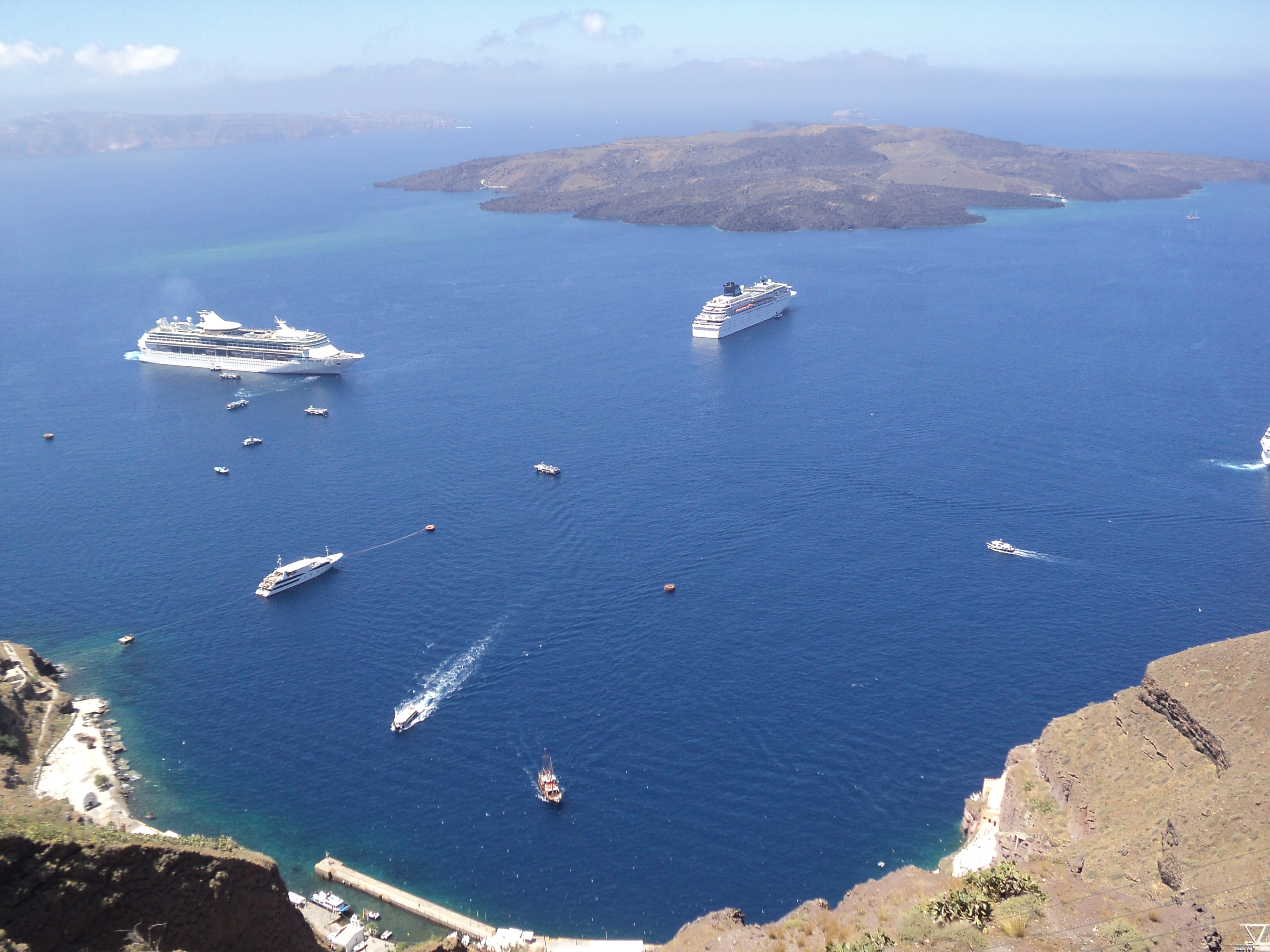
Thira is the harbour for the monstrous cruise ships and also the boat trips to Nea Kameni, the volcanic island which has been dormant since 1950. The way down to the harbour is by cablecar, donkey (well, mules actually) or Shanks’s pony for the brave. At one point there were four cruise ships unloading their “if-it’s-Tuesday-this-must-be Santorini” lot. Frantic tourists were rushing round – “I’ve lost my group. Where do I go?” – and the local boatmen were doing good business running the tenders.
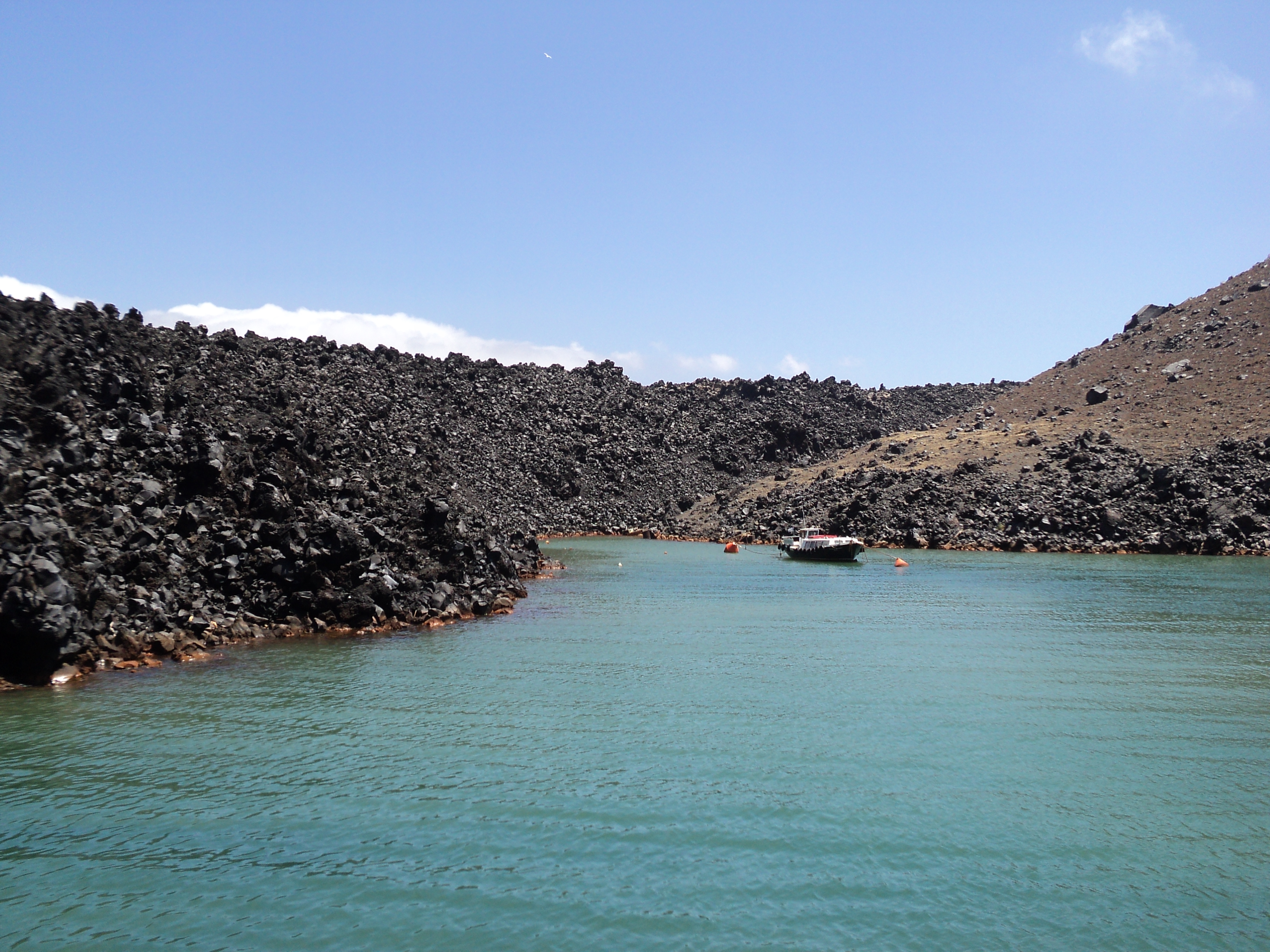
Nea Kameni is bleak, no other word for it. They could have filmed Star Wars here.


We also visited the little town of Oia farther along the cliff, which is a favourite place for sunset viewing. We found it too manicured and “boutiquey” for our taste, and I didn’t see a single moggie! Could that be the yachtie abbreviation for “catamaran”?

It was interesting to talk to one of the hotel staff, a university student, who was eager to discuss Greece’s current plight. Tourist islands like Santorini are not suffering the same way as Athens or Thessaloniki, since they have tourist income, no immigrants and are often self-sufficient. The government has imposed a heavy tax on fuel, so there are fewer inter-island ferries and consequently fewer travellers willing to pay the vastly increased fares. So the government doesn’t get much more tax income, but low-cost airlines are bringing visitors

 Boadicea's Chariot
Mrs J and I spent several happy hols in ‘cave’ hotels there and managed to avoid the more popular resorts too. A very special island.
Excellent pictures, Sheona!
What a splendid gift sheona!
Nothing like a good geological! I have never been to Greece, just a bit too far to the right so to speak and never had any business there.
Wonderful obsidian I have never seen it so perfectly crystalline, but I do own a necklace of obsidian beads, very wearable.
I am a great devotee of fumaroles , hot springs, geysers and the like, splendid manifestations of grumbling volcanics giving a glimpse of the ‘alternative afterlifestyle’ (Better than a harp on a cold cloud in my estimation!)
There is a wonderful National Park in N California, Larssen Volcanic Park, that nobody ever appears to visit.
The road itself goes to over 7000′ up the mountain so you can get out and stroll around the fumaroles, hot springs and streams than run boiling hot, literally. Everywhere are mud pools spitting and boiling from about 9″ to 6′ wide. Dogs are fascinated by these and have to be actively dissuaded from boiling their noses! One has to dodge some emanations of hydrogen sulphide PDQ. The whole thing is definitively a Dante’s Inferno reality check.
Quite horrible are the stream beds, hideous reds and greens from deposited out minerals carried in the boiling water, as they cool further downstream, bizarre algae form, just like underwater thermal vents on the sea floor, a complete alternative world.
Further down the volcano there were huge rocks of dissonant material with notices appended, these rocks, the size of people carriers had been flung 7 miles in a volcanic explosion, truly epic! When you consider the great volcanic activity of the Jurassic it makes one feel quite sorry for the dinosaurs! The growth of the volcanic Islands at Santorini look very modest compare with the initial violence of the formation of the caldera in the first place.
This is so everywhere, Krakatoa affected world wide climate for years but it was only the blowing up of the current cone, it was not the formation of the caldera.
It tickles me pink that humanity should have the presumption to actually think that they can control the world and global warming etc etc. One good burst of volcanics and its goodbye humanity, better luck next time!!
Perhaps that is why Larssen appears to be so unpopular as a venue, bit too much of a reminder of the frailty of humanity and how tenuous our hold here actually is.
Splendid posting, thank you.
I think I had better point out that the caldera at Santorini is a small recent historical one by comparison to some that did the serious damage during the Jurassic, like by factor 10+ otherwise my last para doesn’t make a lot of sense.
The current thinking is that the whole Caribbean basin is one great caldera, truly awesome!
Wonderful place, Sheona. Thanks for the photos and the background.
I recently watched a fascinating documentary on this or a similar caldera, nice to see and hear from somebody who has actually visited one, great post, thanks.
Your comment about the Larssen Volcanic Park reminded me of our visit to Furnas on the island of San Miguel in the Azores. It too has lots of hot springs dotted around, bubbling mud and such giving a frightening idea of the heat at the earth’s core.
http://www.visitportugal.com/NR/exeres/03BB4D9F-2B29-4469-B00C-5413796A260A,frameless.htm?parentGuid=7DDFE548-E53D-4F46-AB80-59447A3D5785
Local families bring the Sunday lunch to cook in the free heat and bags of corn on the cob are lowered into the hot springs and then sold to tourists. Tasted OK as I recall. There was an unfortunate accident there a few years ago when a British tourist tripped and fell into one of the hot springs. He did not survive. You do have to watch where you’re putting your feet.
When I went to Santorini, not so long ago, I was told that the volcano was still active. There was still smoke rising!
Fantastic place – thanks for the photos! What fascinated me most was the depth of volcanic dust that had buried the settlement on the island.
Re7, Madeira has a steak restaurant the same, the grill is over the magma chamber which happens to be very near the surface. All great fun! Re the tourist I know the feeling, trying to keep dogs out of boiling mud pools, fortunately they tend to use their noses first and realise they are too hot to investigate further.
Re8, There are hundreds of volcanoes that are still active world wide. Rough rule of thumb to the non geographer, if it is still pointy it is young has not been around long enough to be worn down = still active.
Volcanoes are topped up so to speak from below into their magma chambers by rock being forced and liquified from subduction zones from continental drift. Santorini is part of a volcanic arc from
Greece down to Turkey caused by the African plate drifting to the North at about 5cm per year.
some, not all volcanic activities are closely related to earthquakes. Most of the Med earthquakes and volcanics are closely related, it depends on the type of rocks.and type of faults.
Example of non related is S. California, zillions of earthquakes but no current volcanics associated, further north where we are, the Cascades are very much alive and kicking, further south Nicaragua too has the close association of earthquakes and volcanics.. All depends whether the earthquakes are slip sideways or slip DOWN into subduction zones, The San Andreas is a sideways fault hence no displacement of rock downwards. (The rock downwards syndrome is also a prerequisite for tsunami)
Some days we can see the fumaroles of Mt Baker steaming away against a blue sky, they look like monster smoke signals.
Re6, Soutie, everyone here has seen a caldera they just didn’t recognise it, they are two a penny world wide but most are so big one can frequently only see one side of it the rest is beyond the horizon, they just look like a range of low mountains generally. Santorini is rather special because it is so small it is visually intact.
I don’t think active volcanics are most peoples cup of tea as far a tourist attraction goes, with the exception of Yellowstone’s geyser. When it gets to hydrogen sulphide, hot feet, lava and boiling mud most people are out of there! I think it too poignant a reminder of human inadequacy in the face of the world’s ability to upset the plans of man.
Interesting subject. It took me three months to actively research where exactly I would and would not live up here. re volcanics and earthquakes. We are as safe here as we can be in a very active area.
Forget the coast=tsunami (15 miles away, too old to swim or cling to trees!)
Forget the riverside= history of extensive lahars in the Cascades, remains can actually be seen in the Nooksack valley. (3 miles away, boiling mud? forget it, what a way to go!)
Forget further south= extensively faulted.(wooden housing collapsing on you!)
Forget to the East of the Cascades, prevailing wind carrying ash clouds, (pattern of fall out from Mt St Helens)
Forget two stories= more to collapse/burn/sink, plus you can dive out of the window of a ground floor bedroom, not forgetting to hurl dogs first!
Here we are tucked under a non volcanic flanking range of Mt Baker sheltered from the direct incipient fury of Mt Baker should it go, on boulder clay, reasonably plastic, quick draining, but non liquifying soil in a totally fault free area. As safe as we can be in WA. All in all quite an amusing exercise considering the ‘big one’ is well overdue!