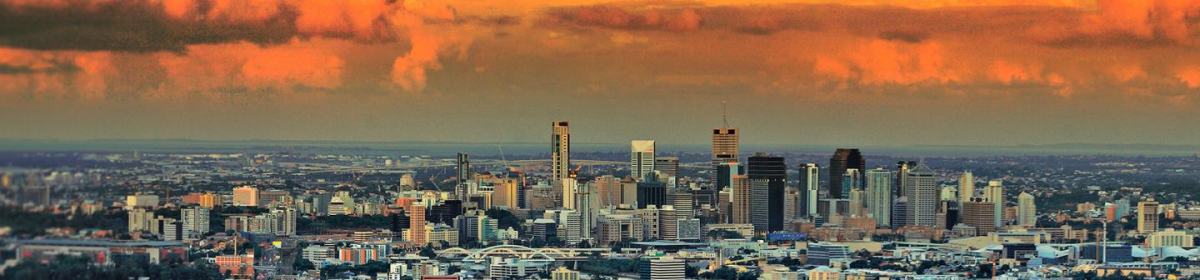
It is early October and the weather is mild on the South China Sea. Hong Kong is beautiful as always, cooler and dryer than during the summer. The city is remarkable. Despite its reputation for being cosmopolitan, ostensibly a glorious marriage of Chinese and British civilisations the city remains at its heart thoroughly Chinese. That is not to say that the British have not left their mark on the city. Traffic flows on the proper side of the road, the left. Despite the best attempts of the Chinese government to undermine traces of the British past signs are still found now and again. The street names are often British in origin – Hennessey, Morrison, Queen’s Road East. Place names are much the same – George V Park, Aberdeen, Victoria Harbour. Even the tea here is a bit different. Of course the actual tea itself is Chinese; there is no other way about it. The preparation is different, never-the-less. There is milk and a bit of sugar in it. This is a-typical for the Chinese who prefer their tea mild and natural. Through the hustle one sees order. People queue prior to entering underground trains. There is a bit more attention paid to not simply ploughing others over. This is utterly unlike the mainland where a mad dash for anything resembling an open seat is seemingly inevitable and one learns simply to push ahead without regard for others, a sort of universal understanding that no offence is intended. There is no other way, after all, the move with so many people around.
St. John the Baptist, the old Anglican church near Central, remains one of my favourite places in the city. It is an island of tranquillity, a remnant of an old order that for its failures also had good intentions and successes. In the chapel there are a few tattered old flags hanging. The Union Jack and the old flag of British Hong Kong along with a few regimental flags are still there. Hidden away out of sight, but perhaps not fully out of mind, they serve as reminders that once this bit of China was the pearl of another’s empire. Not too far away the HSBC building is graced with the emblem of the former Crown Colony. The Hong Kong legislative building continues to feature the royal coat of arms of the United Kingdom. With no shortage of irony the symbols of an old empire centred on the person of the British monarch, the holder of tradition and traditional gentility is juxtaposed with the 5-star banner of the now well-post-Communist Chinese state. A godless, rootless entity that lacks the gentility of either settled tradition – British or Chinese.
Macau, under an hour by hydrofoil to the south, is interesting in its own right but gruelling in others. The traveller, especially one visibly not Chinese, is met with a barrage of offers to be taken on an over-priced tour of the miniscule former Portuguese enclave. If one came as a group it would be reasonable. A few dollars for each to get a sense of the city, alone the price is too high. After escaping the madness of the terminal with one of the few tourist maps it is advisable to take a bus. It does not matter which bus, any bus will do. No matter the direction it will bring travellers closer to the city centre, or not. It is irrelevant; it will make it easier to find a taxi. In Macau taxis are necessary. Not too expensive, they make it easy to get to the main sites. The bus system is poorly organised and the city streets confusing. Lacking the centralised, ceremonial planning of Beijing with its heavy emphasis on structure and the grid pattern as well as being curses by the influence of the Portuguese who did not concern themselves with such trivial matters as logical urban planning finding one’s way is a challenge. The few dollars it takes to avoid hassles are dollars well spent. Away from the harbour, away from the godforsaken racket of the casinos traces of gentility remain. Old Chinese men playing mah-jong, old Chinese women gossiping while drinking tea in parks with younger people walking languidly past in the ever-warm southern Chinese weather. There is a sense of gentle decay here away from the gamblers by the casinos and the throngs of tourists in the ruined Largo do Leal Senado with its bland assortment of tat and international chains. The buildings are beautiful, even in their faded states. Portuguese Baroque churches, mock-Baroque theatres from the nineteenth century lay scattered in-between the various houses of different eras and states of preservation. Macau is more visual than Hong Kong in some regards. History lives on, but its traces are more strongly seen than felt.
Taiwan remains in its own way a pleasant change from both Hong Kong and Macau. Long past its colonial period, either Manchu, Japanese, or the pretensions of a fallen generalissimo, the island has come far. I avoid Taipei, its glittering capital. It is not an avoidance of contempt. Taipei is pleasant enough. It is simply not my favourite part of the island. Its heavy concentration of the remnants of Kuomintang China, those who dreamt of Shanghai, not Kaohsiung and their descendants, created a region which showed what the mainland could have been but never will. It is China, but China with taste and gentility – the China that was the world’s most enduring civilisation. Much like Hong Kong and Macau, the writing here is proper Chinese. Traditional Chinese, not the “simplified” characters, the mangled corpses of characters so cold-bloodedly killed on the Mainland for the sake of “progress”. I leave this city with its splendours for those who desire it. I long to be further south, to be in a place where the pace of life slows and the language changes. Further south they speak Taiwanese, a distinct variation of the Minnan spoken across the Taiwan Strait. The Mandarin affectation does not permeate so strongly here, I know where I am. The expressions are different, more confident. People smile more easily; the humour is rougher and bolder. Kaohsiung is beautiful in its own way.
Japan is only a few hours away. This time my main destination is Osaka, the trashiest, the sleaziest part of a country notoriously proud of its refinement and elegance. The people here are louder, more exuberant. The robotic reserve and measured courtesies of Tokyo are a world away. This is a city, after all, where thousands jump into the river whenever the Hardluck Hanshin Tigers become Japan’s baseball champions. The city is ugly, but it is bold. It was bombed and it was rebuilt. Aesthetics were largely irrelevant – how can anyone worry about a place being beautiful when millions must be quickly housed? The food here is good, the laughs louder, the smiles broader. The company here is friendlier. Reserved to an extent, the Japanese preference for avoiding potential embarrassment remains, but not to the dehumanising degree of Tokyo. Travelling through the city with Japanese friends I am not feared as much. If necessary there is someone who can clearly communicate. For a few days I leave the concrete of Osaka behind for the concrete of Hiroshima. I must keep an appointment with a woman I have never met who, due to a common acquaintance, wishes to meet me. Despite all evidence to the contrary she somehow believes that my English skills are superior to hers. Never mind the remnants of a German accent buried into a slight Oxbridge affectation. I also wish to see the sun set over Miyajima, to see the autumn colours. Here there are countless Japanese maples, leaves changing colour more numerous than grains of sand or ghost samurai crabs lurking on the shores of Dan-no-Ura. From here I return for a third visit to Tokyo, a city I have come to accept but hardly love. I have an appointment to keep. In this city of millions of strangers I have a friend who, despite working on less than eighty hours weekly, is willing to meet me for lunch.
After this is finished I will fly back to Minnesota for six weeks, long enough to finish up my final term, long enough to have my passport (German, of course) see the addition of a Republic of Korea student visa, my permit to enter for five months to study the language, history, and culture of arguably the world’s most under-rated country.

 Boadicea's Chariot
Fascinating stuff Chris, I do sometimes wish that I had your airmiles! 😉
Beautifully observed and written, Christopher. Thank you.
I too have been fascinated by HK and Japan – so many worlds away.
Really enjoyed this Christopher, brought back many memories
Thank you, Christopher, an interesting perspective on two places I have never visited.
I’m a great believer in vicarious travel now!
Soutie: amazingly I don’t have air miles.
Janus: they’re fantastic places, aren’t they Janus? For me Japan will always be about friends.
It’s also an amazingly beautiful, civilised country.
JHLeck: I’m glad that my ramblings brought enjoyment to someone. I will be sure to write more as my travels take place.
Araminta: I will post pictures this time!
Thank you.
CO: ?