When asked if he’d like to visit the Soviet Union “The bastards murdered half my family”
Goodnight everyone, sleep well.
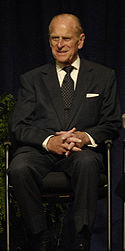

When asked if he’d like to visit the Soviet Union “The bastards murdered half my family”
Goodnight everyone, sleep well.
 Boadicea's Chariot
That’s telling em. Goodnight Mr Zen, sleep well.
Been out all day, up the creek…..in the best possible way of course. Will explain tomorrow 🙂
I like this guy for speaking his mind. If more of us did this there would be fewer wars and bad feelings around.
Why do the British keep quiet and seethe. If I think you are and Ahole I will tell you to your face.
What Rick said. 🙂
Goodnight, Tim, sleep well.
He certainly has a point.
What’s “Foot in mouth” about that? It’s a historical fact.
It was convenient for him not to mention the people his ‘family’ have murdered.
As some of you may know, I have a soft spot for the Royal Family, but Prince Philip has neglected to mention that the other half of his family, i.e. King George V, denied asylum in Britain to the Czar who sought it there after his abdication, thus sending him to his death. I am always struck by how little is made of this fact. The explanation was that the presence of the Czar might lead to an uprising in the UK. That sort of behaviour in time of war was very unlike that of Churchill who was always adamant that the ‘right thing’ should be done. I am reading Max Hasting’s ‘Finest Years’. Fascinating. Churchill truly was a remarkable man.
Sipu, yes, but there was the little matter of the enforced repatiation of many Poles after WW2 straight into Stalin’s clutches.
Zen, I confess to not knowing too much about that episode and will have to research it. Perhaps you could give me a few links. I will say this though, Churchill knew that Stalin was evil and an enormous threat, but Roosevelt overruled him. FDR and the US behaved appallingly throughout the war. Churchill’s hands were tied because he could not conduct it without Amercian help. At the Tehran Conference when victory was assured, Stalin suggested that 50,000 German officers should be executed. Roosvelt said that he thought 49,000 would suffice. Churchill left the room in disgust. Roosevelt may have been joking, albeit a sick joke, but Churchill knew that Stalin was not and was already responsible for the deaths of at least 10,000 Polish officers. Actually it turned out to be 30,000. Churchill always had the highest regard for the Poles. He even lacked antagonism towards the German race. He said that Germany existed before the Gestapo and would exist after its demise. Roosevelt’s overriding ambition was to break the British Empire. On an occasion when Churchill was in America, he was asked by an Anglophope how the Indians were getting on. He asked the lady if she meant the Indians of Asia, who were prospering under British Rule, or the native Americans who had suffered rather badly under American rule. Churchill of course had Cherokee ancestry via his mother.
Sipu,
‘Churchill always had the highest regard for the Poles.’
He didn’t let them participate in the Victory Parade at the end of the war. They were the only allied country not to!
“churchill, repatriation of the Polish”
Sipu, Google the above address for info.
Hi Toc, I am not sure I agree with you. The victory parade was in 1946 and Churchill was no longer in power. This is only Wikipedia, so must be taken with caution, but it indicates that Churchill protested the Labour government’s actions. http://en.wikipedia.org/wiki/London_Victory_Celebrations_of_1946
If you have any links that can expand on this I would be grateful for them. Hope you are still having fun.
Zen, I have, but some specific sites would be good. In any event a quick appraisal which I accept may be flawed, seems to indicate that Churchill was stuck between a rock and a hard place. Stalin had negotiated the annexation of Kresy, which Poland had captured from the Soviet Union in 1920. Churchill hated Stalin, but he could not argue against Roosevelt who had said to the US Ambassador to Moscow,
“I just have a hunch that Stalin is not that kind of a man. … I think that if I give him everything I possibly can and ask for nothing from him in return, noblesse oblige, he won’t try to annex anything and will work with me for a world of democracy and peace.”
The Poles from Kresy were fighting under British Command. They wanted to return to Kresy, but that was now the USSR. So they were sent to Poland. At Yalta it had been agreed amongst other things:
“The status of Poland was discussed. It was agreed to reorganize the communist Provisional Government of the Republic of Poland that had been installed by the Soviet Union “on a broader democratic basis.”
The Polish eastern border would follow the Curzon Line, and Poland would receive territorial compensation in the West from Germany.
Churchill alone pushed for free elections in Poland.[7] The British leader pointed out that UK “could never be content with any solution that did not leave Poland a free and independent state”. Stalin pledged to permit free elections in Poland, but forestalled ever honoring his promise.”
Let me emphasise that Churchill alone pushed for free elections in Poland.
According this parliamentary debate in 1946, 160,000 in HM Forces were given the option to remain in Britain. See Mr Bevin’s statement and follow up. http://hansard.millbanksystems.com/commons/1946/may/22/polish-armed-forces-repatriation-and
I am a great admirer of the American people which does not mean that I have to feel the same way about all of their leaders, there are exceptions and JFK is one, I firmly believe that without his cool head in the Cuba crisis we would now be floating around in the upper atmosphere and for this and other easons is why a picture of him hangs in my home.
FDR however was the consumate operator and tried to wring every advantage possible out of the alliences forged in WWII. There is no doubt that his relationship with Churchill was close but it could be a bit one sided at times and I wont even start on the way he viewed De Gaulle, even suggesting to him at one stage that France should become part of the British Commonwealth
As for Churchill he had many faults but he was the man for the time, does anyone doubt this? Without him we would all be speaking German and many people who enrich the world in so many ways would be dead or unborn because of their religion.
Is it just a British trait that makes us turn on those we once percieved to be great or apologise to those in the world who think that our forebears treated them badly?
OMG, hear, hear!
Sipu, I’m sure you are right about his unenviable position. I am a confirmed Churchillophile, but I often wondered about this point, which seemed uncharacteristic. As a matter of interest I was in the route-lining contingent at his funeral – Operation Hope Not.
Zen
I remember the day of the funeral and went home in my lunch break to watch some of it on TV. The bit that got me was when the dockers lowered the crane jibs as the coffin went by on the river, still brings a lump to my throat when I see it now and again. Later that day we all walked down Sheen Lane to the railway level crossing gates to watch the train bearing his coffin go by, there were a lot of people there. My memory was of the train hurtling through at speed but it was enough. Good old Winnie.
I was only a small boy when Churchill died. I remember one day, about lunch time, my father had come in from work and was listening to the BBC World Service. It was January, so it was summer in Rhodesia and he was wearing khaki shirt and shorts. He probably had a Castle beer, as was his wont at lunch time. I asked who they were talking about. He said it was about the death of Churchill. I asked who Churchill was. Somewhat shocked by my ignorance, he replied, “Churchill was the man that won the bloody war.”
“Churchill was the man that won the bloody war.” – Wonderful quote!