8. Victorian poet Elizabeth Barrett Browning (1806-1861) published her first poem in 1820, at the age of fourteen. In 1826, she published her first collection of poems, entitled “An Essay on Mind and Other Poems.” In 1845, she met fellow poet Robert Browning, with whom she had begun a correspondence after he read one of her poetry collections. The couple wedded secretly despite the objections of Elizabeth’s father and remained happily married until her death in 1861. Elizabeth Barrett Browning’s most popular collection of poetry was published in 1850 under the title “Sonnets from the Portuguese,” referring to her husband’s pet name for her–the “Portuguese.” Additionally, the poems in this collection used rhyme schemes typical in Portuguese sonnets.
2.Scottish King Robert I (1274-1329), known as Robert the Bruce. Although he had sworn allegiance to Edward I of England in 1296, a year later he switched sides, fighting for Scotland’s independence. He was crowned King of Scots at Scone in 1306, though Scotland had not yet achieved independence. Making slow inroads, Bruce’s victory at the Battle of Bannockburn (1314) was a major stride in achieving his goal. In May 1328, England’s King Edward III recognized Scotland’s independence and Bruce as its king.
1. The extraordinary life of the Venerable Bede created a rich legacy that is celebrated today at Bede’s World, Jarrow, where Bede lived and worked 1300 years ago. “Servant of Christ and Priest of the Monastery of Saints Peter and Paul which is at Wearmouth and Jarrow.” These are the words which Bede used to describe himself. Today, we probably know him best as the author of the Ecclesiastical History of the English People which he completed in AD 731. His work is our primary source for understanding the beginnings of the English people and the coming of Christianity. This is the first work of history in which the AD dating system is used.
Bede was born in AD 673 on the lands of the monastery. Of his family background we know nothing, save that he was entrusted at the age of 7 to the care of Benedict Biscop, the founder of the monastery, and then to Ceolfrith who in AD 681 was appointed Abbot of the new foundation at Jarrow. Bede spent the rest of his life in the monastery. He was ordained deacon at the age of 19 and priest at 30. He observed the Rule of the monastery and was punctilious in his attendance in choir at the daily offices. Outside of his time in choir, he worked as scholar and teacher; he records that “It has always been my delight to learn or to teach or to write”. And he explains that “I have made it my business, for my own benefit and that of my brothers, to make brief extracts from the works of the venerable fathers on the holy scriptures, or to add notes of my own to clarify their sense and interpretation”.
6. Robert Boyle (1627-1691) was an Irish natural philosopher, noted for his work in physics and chemistry. He was an alchemist; and believing the transmutation of metals to be a possibility, he carried out experiments in the hope of effecting it; and he was instrumental in obtaining the repeal, in 1689, of the statute of Henry IV against multiplying gold and silver. With all the important work he accomplished in physics – the enunciation of Boyle’s law, the discovery of the part taken by air in the propagation of sound, and investigations on the expansive force of freezing water, on specific gravities and refractive powers, on crystals, on electricity, on colour, on hydrostatics, etc.- chemistry was his peculiar and favourite study. His first book on the subject was “The Sceptical Chemist,” published in 1661, in which he criticized the “experiments whereby vulgar Spagyrists are wont to endeavour to evince their Salt, Sulphur and Mercury to be the true Principles of Things.” For him chemistry was the science of the composition of substances, not merely an adjunct to the arts of the alchemist or the physician. He advanced towards the modern view of elements as the undecomposable constituents of material bodies; and understanding the distinction between mixtures and compounds, he made considerable progress in the technique of detecting their ingredients, a process which he designated by the term “analysis.” He further supposed that the elements were ultimately composed of particles of various sorts and sizes, into which, however, they were not to be resolved in any known way. Applied chemistry had to thank him for improved methods and for an extended knowledge of individual substances. He also studied the chemistry of combustion and of respiration, and made experiments in physiology, where, however, he was hampered by the “tenderness of his nature” which kept him from anatomical dissections, especially of living animals, though he knew them to be “most instructing.”
You do post some exceedingly clever quizzes Boa. Well done. 🙂
Thanks – Tocino. I’ll put some clues up later!
This was a hard one. 😦
No point in malking them too easy – I’ll put some clues up now!
Yes,this is a bit hard for an ignoramus on all things historical like me! I was in agreement with the Bede and the Browning…but didn’t have any answers of my own. Still an interesting quiz though 😉
Even with the clues Claire?
4 = Lucrezia Borgia?
Spot on Brendano. Well done. 🙂
Lucrezia Borgia (1480-1519) was the daughter of Rodrigo Borgia, the powerful Renaissance Spaniard who would later become Pope Alexander VI and Vannozza dei Cattani. Lucrezia’s family later came to epitomise the ruthless Machiavellian politics and sexual corruption alleged to be characteristic of the Renaissance Papacy. Lucrezia was cast as a femme fatale, a role she has played in many artworks, novels and films. No truly authentic portrait of Lucrezia is known, nor is enough is known about the historical Lucrezia to be certain whether any of the stories about her active involvement in her father’s and brother’s crimes are true. Was she a “monster of cruelty and deceit”? Or a pawn of her power-hungry father and brother? Was she a poisoner or simply the victim of some very bad press? Once again, the differing perceptions of history are fascinating.
Oh good, Boadicea, some clues. I will revisit tomorrow, and just hope there are a few left! 🙂
I rather think there might be, Araminta. 🙂
Ok; just a guess here. Number 10: Branwell Bronte…?
10. Branwell Brontë (1817-1848) was born in 1817. He was the brother of the Brontë sisters. He received no formal education, but does not appear to have suffered as he was a very capable scholar with an enthusiastic desire to learn. From June 1838 to May 1839 he worked as a portrait painter in Bradford. In January 1840 he took up position as tutor for the Postlethwaite family at Broughton-In-Furness, in June 1840 he is dismissed. In April 1841 he was employed as Clerk in Charge of Luddenden Foot station near Hebden Bridge. While there he was known to frequent the Lord Nelson Tavern. In March 1842 he is dismissed from his post as there was found to be a deficit in the station accounts, attributed to Branwell Bronte’s incompetence rather than theft. January 1843 his sister, Anne has managed to secure post of tutor for Branwell with the Robinson family at Thorp Green. In July 1845 he is dismissed from his post as tutor. It was discovered that he had an affair with Mrs Robinson. For the next three years Branwell’s state physically and mentally take a rapid decline due to his dependence on drink and opium and an increased state of self pity and worthlessness. He heard of the death of Mr Robinson and attempted to try to rekindle his relationship with Mrs Robinson which failed. On the 24th September 1848 Branwell died of consumption, aged 31.
Not personally convinced in re your precis of the career of the boy Bruce but, moving on.
Is there any chance that No 7. could be the naval governor of whom Voltaire wrote ‘Dans ce pays-ci, il est bon de tuer de temps en temps un amiral pour encourager les autres’.
John Byng?
Write me a better one John!
No, not Byng – far easier than that!
Hi again, Boa.
Not over confident about Byng but fairly sure that 3. is Sandro Botticelli.
One of the great moments of my time on this earth was walking into a room in the Uffizi and getting up close and personal with ‘The Birth of Venus’. Mind-blowing!
3 Boticelli
7 William Bligh
9 Maybe a young Isambard Kingdom Brunel?
Yes! I queued for over four hours to get into the Uffizi – no one believes that I really did that, I am notoriously impatient with queues, 10 minutes and I’m gone!
3. Sandro Botticelli (1445-1510) probably was the most important Italian painter of the Early Renaissance. His most notable work is without a doubt “The Birth of Venus”, a huge painting that is exposed in the “Galleria degli Uffizi” in Firenze. He was influenced in his art by Fra Filippo Lippi and Antonio Pollaiuolo. The repeated contacts with the Medici family were undoubtedly useful for granting him political protection and creating conditions ideal for his production of several masterpieces.
7. Vice-Admiral William Bligh (1754-1817) FRS RN was an officer of the British Royal Navy and a colonial administrator. A notorious mutiny occurred during his command of HMS Bounty in 1789; Bligh and his loyal men made a remarkable voyage to Timor, after being set adrift by the mutineers in the Bounty’s launch. Fifteen years after the Bounty mutiny, he was appointed Governor of New South Wales in Australia, with orders to clean up the corrupt rum trade of the New South Wales Corps, resulting in the so-called Rum Rebellion.
Right, I had started cheating (aka Wikipedia-ing) but I see that CO got the naval governor anyway.
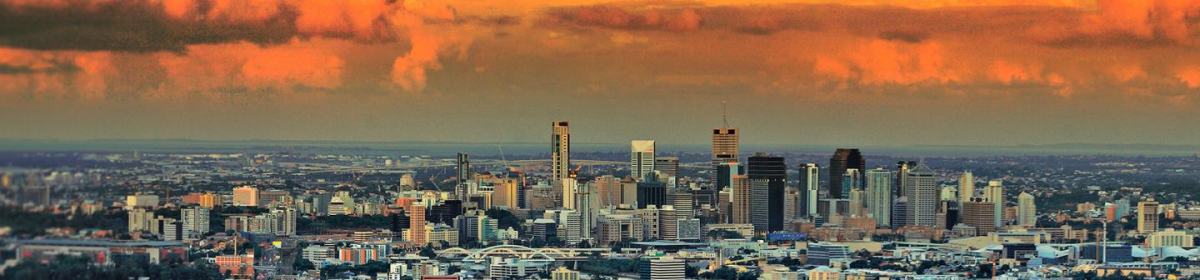
Tried Brisbane. Never knew that he was a Jock and the successor to Sir Walter Scott as the President of the Royal Society of Embra.
In Brisbane this coming Christmas on our way to spending New Year with the wife’s brother up in hippyland. Looking forward to finding out more about Sir Thomas B. now that I knw he was one of us.
Christina: No – not a Brunel at all… not even the right country!
An Irishman indeed. Being born in a stable would not have made him a horse. 😉
John Mackie, done the Maleny thing. Glass Mountains are pretty. Done the rum thing too up in Bunderburgh, or however you spell it. But real Hippy Land is Byron Bay. Or it used to be. I think many of the hippies have grown up and become capitalists. Good surfing there though. I never made it to the Atherton Highlands which is where I wanted to take a look. My nephew has just gone out to go and live in Brisbane.
Actually, it’s Nimbin, west of Byron Bay. And Atherton Tablelands. Close, but no cigar. 😉
Lucky I am not a smoker. 😉 Sent you an email by the way. The removal was deliberate. The post looked more vulgar in the morning than it seemed in the evening.
Thanks Sipu, I’ll take it down again immediately. Sorry. 😦
No e-mail by the way, and I’ve checked the spam folder. aussiebearsy@gmail.com
Ah, you’ve done it already, of course. 😳
8. Louis Braille?
Stoopid of me. No9. 😦
Damn, I thought of Bligh.
Sipu, Boyle was an Irishman from Lismore, Co. Waterford. You lose a mark for thinking that the aphorism you spouted was once uttered by Wellington. 🙂
I think 5 is Giordano Bruno.
More Irishry, just to irritate Sipu … James Joyce, a big fan of Bruno, liked to refer to him humorously as ‘The Nolan’ … Bruno was from Nola, ‘Nolan’ is an Irish surname, and leaders of Irish families/clans used to go by the surname with ‘The’ before … ‘The O’Rahilly’ was killed in the Easter Rising, for example.
John Mac: What’s the Voltaire link? SOrry; Voltaire used to be a bit of an obsession of mine.
Boa; Branwell Bronte – down to all that ‘reader I married him’ stuff at uni. His iconic painting of Emily, Charlotte and Anne is said to contain a fourth figure – himself, which they say he blacked out, either in a fit of depression, or after a row with his dad. Today, he would probably have fitted right in to some dysfunctional rock band, Babyshambles or something. Link to painting here: http://mick-armitage.staff.shef.ac.uk/anne/brontes.html
Boa will be back shortly – she’s stacking the dishwasher (I cooked today). 😆
… you’re right, Tocino!
Brendano, off to lunch, but will get back to this later. Maybe I have been misinformed, but I was under the impression that Boyle’s parents were English who moved to Ireland, where he was born. But I could be wrong. Enjoy your day. Bye.
9. Louis Braille (1809-1852) was the inventor of braille, a world-wide system used by blind and visually impaired people for reading and writing. The first book in braille was published in 1827 under the title Method of Writing Words, Music, and Plain Songs by Means of Dots, for Use by the Blind and Arranged for Them. Louis Braille was born in Coupvray near Paris, France. His father, Simon-René Braille, was a harness and saddle maker. At the age of three, Braille injured his left eye with a stitching awl from his father’s workshop. This destroyed his left eye, and sympathetic ophthalmia may have led to loss of vision in his right. Braille was completely blind by the age of four. Despite his disability, Braille continued to attend school, with the support of his parents, until he was required to read and write. At 10 years of age he won a scholarship to the National Institute for the Blind in Paris. Braille, a bright and creative student, became a talented cellist and organist, playing the organ for churches all over France. In 1821, Charles Barbier, a former Captain in the French Army, visited the school. Barbier shared his invention called “night writing” a code of 12 raised dots and a number of dashes that let soldiers share top-secret information on the battlefield without having to speak. The code was too difficult for Louis to understand and he later changed the number of raised dots to 6 to form what we today call Braille. he became a well-respected teacher at the Institute, but although he was admired and respected by his pupils, his writing system was not taught at the Institute during his lifetime. He died in Paris of tuberculosis in 1852 at the age of 43. His system was finally officially recognized in France two years after his death, in 1854.
5. Giordano Bruno (1548-1600) was an italian philosopher of the Renaissance and follower of Nicolas of Cusa. An apostate Dominican, Bruno tried to incorporate both Copernican astronomy and hermetic mysticism into an atomistic physics. His evident inclination toward pantheism and explicit identification of infinite matter as the eternal substance of the universe in Dell’ infinito, universo e mondi (On the Infinite Universe and Worlds) (1584), De Gli Eroici Furori (The Heroic Frenzies) (1585) and De immenso et innumerabilibus (1591) earned him the condemnation of the church, which expressed its displeasure by burning him at the stake in Rome.

 Boadicea's Chariot
8. Elizabeth Browning?
2. Robert The Bruce?
1. The Venerable Bede?
6 is an Irishman … Robert Boyle. 🙂
8. Victorian poet Elizabeth Barrett Browning (1806-1861) published her first poem in 1820, at the age of fourteen. In 1826, she published her first collection of poems, entitled “An Essay on Mind and Other Poems.” In 1845, she met fellow poet Robert Browning, with whom she had begun a correspondence after he read one of her poetry collections. The couple wedded secretly despite the objections of Elizabeth’s father and remained happily married until her death in 1861. Elizabeth Barrett Browning’s most popular collection of poetry was published in 1850 under the title “Sonnets from the Portuguese,” referring to her husband’s pet name for her–the “Portuguese.” Additionally, the poems in this collection used rhyme schemes typical in Portuguese sonnets.
Source
2.Scottish King Robert I (1274-1329), known as Robert the Bruce. Although he had sworn allegiance to Edward I of England in 1296, a year later he switched sides, fighting for Scotland’s independence. He was crowned King of Scots at Scone in 1306, though Scotland had not yet achieved independence. Making slow inroads, Bruce’s victory at the Battle of Bannockburn (1314) was a major stride in achieving his goal. In May 1328, England’s King Edward III recognized Scotland’s independence and Bruce as its king.
Source
1. The extraordinary life of the Venerable Bede created a rich legacy that is celebrated today at Bede’s World, Jarrow, where Bede lived and worked 1300 years ago. “Servant of Christ and Priest of the Monastery of Saints Peter and Paul which is at Wearmouth and Jarrow.” These are the words which Bede used to describe himself. Today, we probably know him best as the author of the Ecclesiastical History of the English People which he completed in AD 731. His work is our primary source for understanding the beginnings of the English people and the coming of Christianity. This is the first work of history in which the AD dating system is used.
Bede was born in AD 673 on the lands of the monastery. Of his family background we know nothing, save that he was entrusted at the age of 7 to the care of Benedict Biscop, the founder of the monastery, and then to Ceolfrith who in AD 681 was appointed Abbot of the new foundation at Jarrow. Bede spent the rest of his life in the monastery. He was ordained deacon at the age of 19 and priest at 30. He observed the Rule of the monastery and was punctilious in his attendance in choir at the daily offices. Outside of his time in choir, he worked as scholar and teacher; he records that “It has always been my delight to learn or to teach or to write”. And he explains that “I have made it my business, for my own benefit and that of my brothers, to make brief extracts from the works of the venerable fathers on the holy scriptures, or to add notes of my own to clarify their sense and interpretation”.
Source
6. Robert Boyle (1627-1691) was an Irish natural philosopher, noted for his work in physics and chemistry. He was an alchemist; and believing the transmutation of metals to be a possibility, he carried out experiments in the hope of effecting it; and he was instrumental in obtaining the repeal, in 1689, of the statute of Henry IV against multiplying gold and silver. With all the important work he accomplished in physics – the enunciation of Boyle’s law, the discovery of the part taken by air in the propagation of sound, and investigations on the expansive force of freezing water, on specific gravities and refractive powers, on crystals, on electricity, on colour, on hydrostatics, etc.- chemistry was his peculiar and favourite study. His first book on the subject was “The Sceptical Chemist,” published in 1661, in which he criticized the “experiments whereby vulgar Spagyrists are wont to endeavour to evince their Salt, Sulphur and Mercury to be the true Principles of Things.” For him chemistry was the science of the composition of substances, not merely an adjunct to the arts of the alchemist or the physician. He advanced towards the modern view of elements as the undecomposable constituents of material bodies; and understanding the distinction between mixtures and compounds, he made considerable progress in the technique of detecting their ingredients, a process which he designated by the term “analysis.” He further supposed that the elements were ultimately composed of particles of various sorts and sizes, into which, however, they were not to be resolved in any known way. Applied chemistry had to thank him for improved methods and for an extended knowledge of individual substances. He also studied the chemistry of combustion and of respiration, and made experiments in physiology, where, however, he was hampered by the “tenderness of his nature” which kept him from anatomical dissections, especially of living animals, though he knew them to be “most instructing.”
Source
You do post some exceedingly clever quizzes Boa. Well done. 🙂
Thanks – Tocino. I’ll put some clues up later!
This was a hard one. 😦
No point in malking them too easy – I’ll put some clues up now!
Yes,this is a bit hard for an ignoramus on all things historical like me! I was in agreement with the Bede and the Browning…but didn’t have any answers of my own. Still an interesting quiz though 😉
Even with the clues Claire?
4 = Lucrezia Borgia?
Spot on Brendano. Well done. 🙂
Lucrezia Borgia (1480-1519) was the daughter of Rodrigo Borgia, the powerful Renaissance Spaniard who would later become Pope Alexander VI and Vannozza dei Cattani. Lucrezia’s family later came to epitomise the ruthless Machiavellian politics and sexual corruption alleged to be characteristic of the Renaissance Papacy. Lucrezia was cast as a femme fatale, a role she has played in many artworks, novels and films. No truly authentic portrait of Lucrezia is known, nor is enough is known about the historical Lucrezia to be certain whether any of the stories about her active involvement in her father’s and brother’s crimes are true. Was she a “monster of cruelty and deceit”? Or a pawn of her power-hungry father and brother? Was she a poisoner or simply the victim of some very bad press? Once again, the differing perceptions of history are fascinating.
Source
Boa: Oops – I didn’t even look at the clues!
They weren’t there to begin with Claire!
Oh good, Boadicea, some clues. I will revisit tomorrow, and just hope there are a few left! 🙂
I rather think there might be, Araminta. 🙂
Ok; just a guess here. Number 10: Branwell Bronte…?
10. Branwell Brontë (1817-1848) was born in 1817. He was the brother of the Brontë sisters. He received no formal education, but does not appear to have suffered as he was a very capable scholar with an enthusiastic desire to learn. From June 1838 to May 1839 he worked as a portrait painter in Bradford. In January 1840 he took up position as tutor for the Postlethwaite family at Broughton-In-Furness, in June 1840 he is dismissed. In April 1841 he was employed as Clerk in Charge of Luddenden Foot station near Hebden Bridge. While there he was known to frequent the Lord Nelson Tavern. In March 1842 he is dismissed from his post as there was found to be a deficit in the station accounts, attributed to Branwell Bronte’s incompetence rather than theft. January 1843 his sister, Anne has managed to secure post of tutor for Branwell with the Robinson family at Thorp Green. In July 1845 he is dismissed from his post as tutor. It was discovered that he had an affair with Mrs Robinson. For the next three years Branwell’s state physically and mentally take a rapid decline due to his dependence on drink and opium and an increased state of self pity and worthlessness. He heard of the death of Mr Robinson and attempted to try to rekindle his relationship with Mrs Robinson which failed. On the 24th September 1848 Branwell died of consumption, aged 31.
Source
Hi Boa. Always a joy.
Not personally convinced in re your precis of the career of the boy Bruce but, moving on.
Is there any chance that No 7. could be the naval governor of whom Voltaire wrote ‘Dans ce pays-ci, il est bon de tuer de temps en temps un amiral pour encourager les autres’.
John Byng?
Write me a better one John!
No, not Byng – far easier than that!
Hi again, Boa.
Not over confident about Byng but fairly sure that 3. is Sandro Botticelli.
One of the great moments of my time on this earth was walking into a room in the Uffizi and getting up close and personal with ‘The Birth of Venus’. Mind-blowing!
3 Boticelli
7 William Bligh
9 Maybe a young Isambard Kingdom Brunel?
Yes! I queued for over four hours to get into the Uffizi – no one believes that I really did that, I am notoriously impatient with queues, 10 minutes and I’m gone!
3. Sandro Botticelli (1445-1510) probably was the most important Italian painter of the Early Renaissance. His most notable work is without a doubt “The Birth of Venus”, a huge painting that is exposed in the “Galleria degli Uffizi” in Firenze. He was influenced in his art by Fra Filippo Lippi and Antonio Pollaiuolo. The repeated contacts with the Medici family were undoubtedly useful for granting him political protection and creating conditions ideal for his production of several masterpieces.
Source
7. Vice-Admiral William Bligh (1754-1817) FRS RN was an officer of the British Royal Navy and a colonial administrator. A notorious mutiny occurred during his command of HMS Bounty in 1789; Bligh and his loyal men made a remarkable voyage to Timor, after being set adrift by the mutineers in the Bounty’s launch. Fifteen years after the Bounty mutiny, he was appointed Governor of New South Wales in Australia, with orders to clean up the corrupt rum trade of the New South Wales Corps, resulting in the so-called Rum Rebellion.
Source
Not Isambard, Christina. 🙂
Marc?
One of that family anyway!
Right, I had started cheating (aka Wikipedia-ing) but I see that CO got the naval governor anyway.
Tried Brisbane. Never knew that he was a Jock and the successor to Sir Walter Scott as the President of the Royal Society of Embra.
In Brisbane this coming Christmas on our way to spending New Year with the wife’s brother up in hippyland. Looking forward to finding out more about Sir Thomas B. now that I knw he was one of us.
Christina: No – not a Brunel at all… not even the right country!
John – hippyland?
Boa
Maleny?
Up in the Glass Mountains… looks lovely.
An Irishman indeed. Being born in a stable would not have made him a horse. 😉
John Mackie, done the Maleny thing. Glass Mountains are pretty. Done the rum thing too up in Bunderburgh, or however you spell it. But real Hippy Land is Byron Bay. Or it used to be. I think many of the hippies have grown up and become capitalists. Good surfing there though. I never made it to the Atherton Highlands which is where I wanted to take a look. My nephew has just gone out to go and live in Brisbane.
Actually, it’s Nimbin, west of Byron Bay. And Atherton Tablelands.
Close, but no cigar. 😉
Lucky I am not a smoker. 😉 Sent you an email by the way. The removal was deliberate. The post looked more vulgar in the morning than it seemed in the evening.
Thanks Sipu, I’ll take it down again immediately. Sorry. 😦
No e-mail by the way, and I’ve checked the spam folder.
aussiebearsy@gmail.com
Ah, you’ve done it already, of course. 😳
8. Louis Braille?
Stoopid of me. No9. 😦
Damn, I thought of Bligh.
Sipu, Boyle was an Irishman from Lismore, Co. Waterford. You lose a mark for thinking that the aphorism you spouted was once uttered by Wellington. 🙂
I think 5 is Giordano Bruno.
More Irishry, just to irritate Sipu … James Joyce, a big fan of Bruno, liked to refer to him humorously as ‘The Nolan’ … Bruno was from Nola, ‘Nolan’ is an Irish surname, and leaders of Irish families/clans used to go by the surname with ‘The’ before … ‘The O’Rahilly’ was killed in the Easter Rising, for example.
John Mac: What’s the Voltaire link? SOrry; Voltaire used to be a bit of an obsession of mine.
Boa; Branwell Bronte – down to all that ‘reader I married him’ stuff at uni. His iconic painting of Emily, Charlotte and Anne is said to contain a fourth figure – himself, which they say he blacked out, either in a fit of depression, or after a row with his dad. Today, he would probably have fitted right in to some dysfunctional rock band, Babyshambles or something. Link to painting here:
http://mick-armitage.staff.shef.ac.uk/anne/brontes.html
Boa will be back shortly – she’s stacking the dishwasher (I cooked today). 😆
… you’re right, Tocino!
Brendano, off to lunch, but will get back to this later. Maybe I have been misinformed, but I was under the impression that Boyle’s parents were English who moved to Ireland, where he was born. But I could be wrong. Enjoy your day. Bye.
9. Louis Braille (1809-1852) was the inventor of braille, a world-wide system used by blind and visually impaired people for reading and writing. The first book in braille was published in 1827 under the title Method of Writing Words, Music, and Plain Songs by Means of Dots, for Use by the Blind and Arranged for Them. Louis Braille was born in Coupvray near Paris, France. His father, Simon-René Braille, was a harness and saddle maker. At the age of three, Braille injured his left eye with a stitching awl from his father’s workshop. This destroyed his left eye, and sympathetic ophthalmia may have led to loss of vision in his right. Braille was completely blind by the age of four. Despite his disability, Braille continued to attend school, with the support of his parents, until he was required to read and write. At 10 years of age he won a scholarship to the National Institute for the Blind in Paris. Braille, a bright and creative student, became a talented cellist and organist, playing the organ for churches all over France. In 1821, Charles Barbier, a former Captain in the French Army, visited the school. Barbier shared his invention called “night writing” a code of 12 raised dots and a number of dashes that let soldiers share top-secret information on the battlefield without having to speak. The code was too difficult for Louis to understand and he later changed the number of raised dots to 6 to form what we today call Braille. he became a well-respected teacher at the Institute, but although he was admired and respected by his pupils, his writing system was not taught at the Institute during his lifetime. He died in Paris of tuberculosis in 1852 at the age of 43. His system was finally officially recognized in France two years after his death, in 1854.
Source
5. Giordano Bruno (1548-1600) was an italian philosopher of the Renaissance and follower of Nicolas of Cusa. An apostate Dominican, Bruno tried to incorporate both Copernican astronomy and hermetic mysticism into an atomistic physics. His evident inclination toward pantheism and explicit identification of infinite matter as the eternal substance of the universe in Dell’ infinito, universo e mondi (On the Infinite Universe and Worlds) (1584), De Gli Eroici Furori (The Heroic Frenzies) (1585) and De immenso et innumerabilibus (1591) earned him the condemnation of the church, which expressed its displeasure by burning him at the stake in Rome.
Source
Sipu, Boyle could be described as Anglo-Irish but we like to claim him, as we’re a little short of famous scientists. 🙂
His father was English, but ‘Boyle’ is a Gaelic-Irish name.
Thanks for another good quiz, Boadicea. I take it you’ll be going through the alphabet?
So, I’ll get my final answer in early … 10 is Zozimus. 🙂
I’ve got up to ‘E’ already sorted – and now I’ll have an even harder task when it comes to ‘Z’ 🙂
I’ve often thought that it would be a bit of a bugger to be dyslexic in braille.
Boadicea, great quiz, thanks. Next time, please can you give a bit of warning as to when you are going to publish. Thanks.