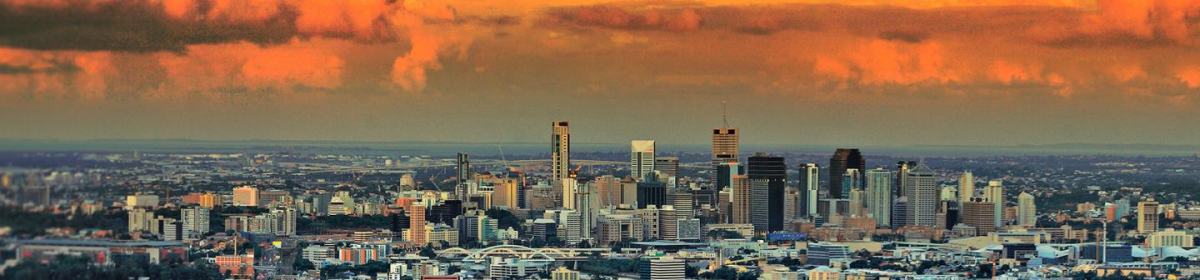
I was quite upset yesterday to read about the devastation cause by heavy rain and mudslides in the World Heritage site of the Cinque Terre in Italy. Just two years ago we spent a very pleasant week there staying in the village of Manarola. Our hotel was situated just 400 metres from the station, but those metres were almost vertical. Getting to what became our favourite restaurant, Da Billy, provided good cardiovascular exercise.
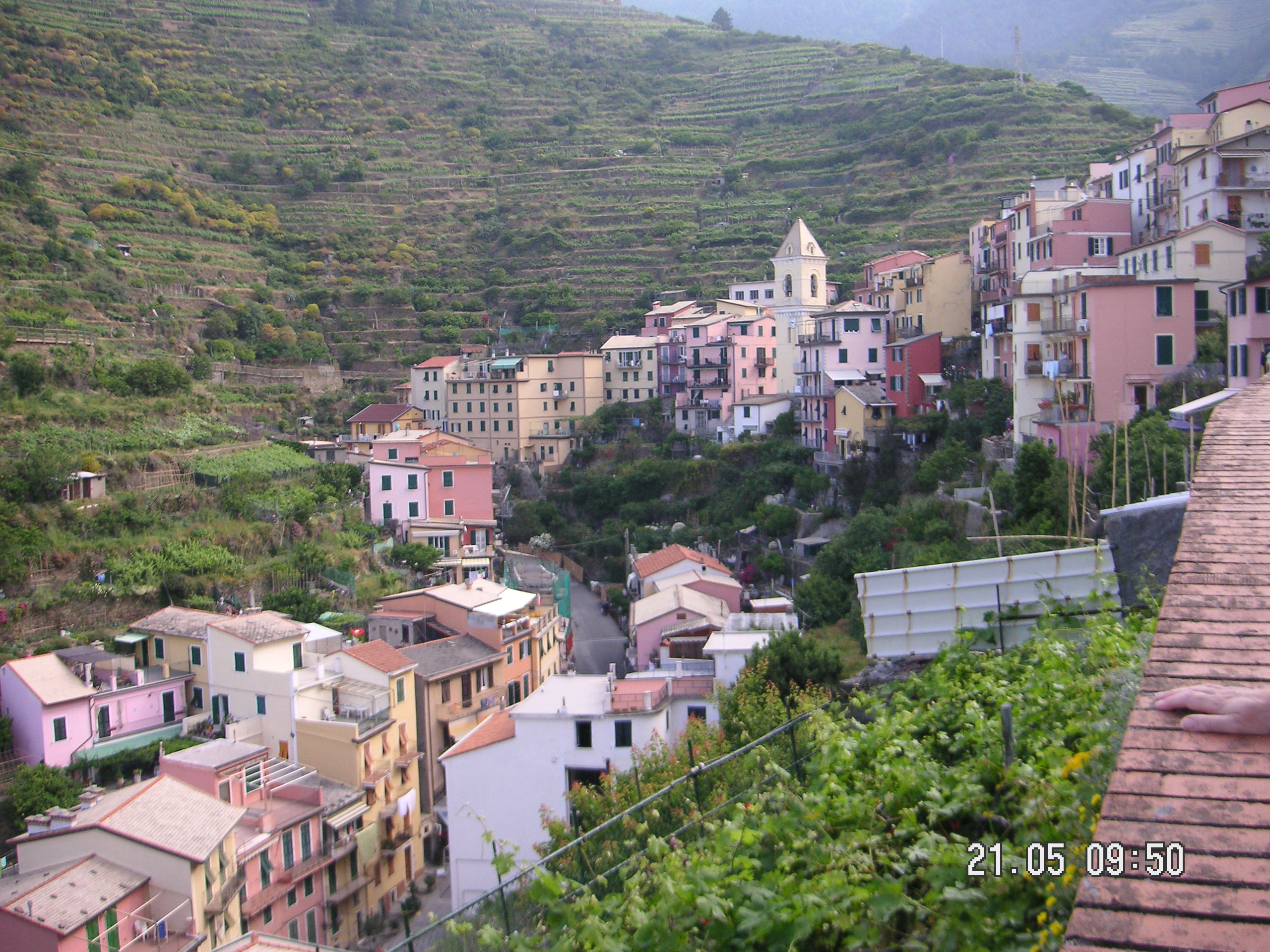
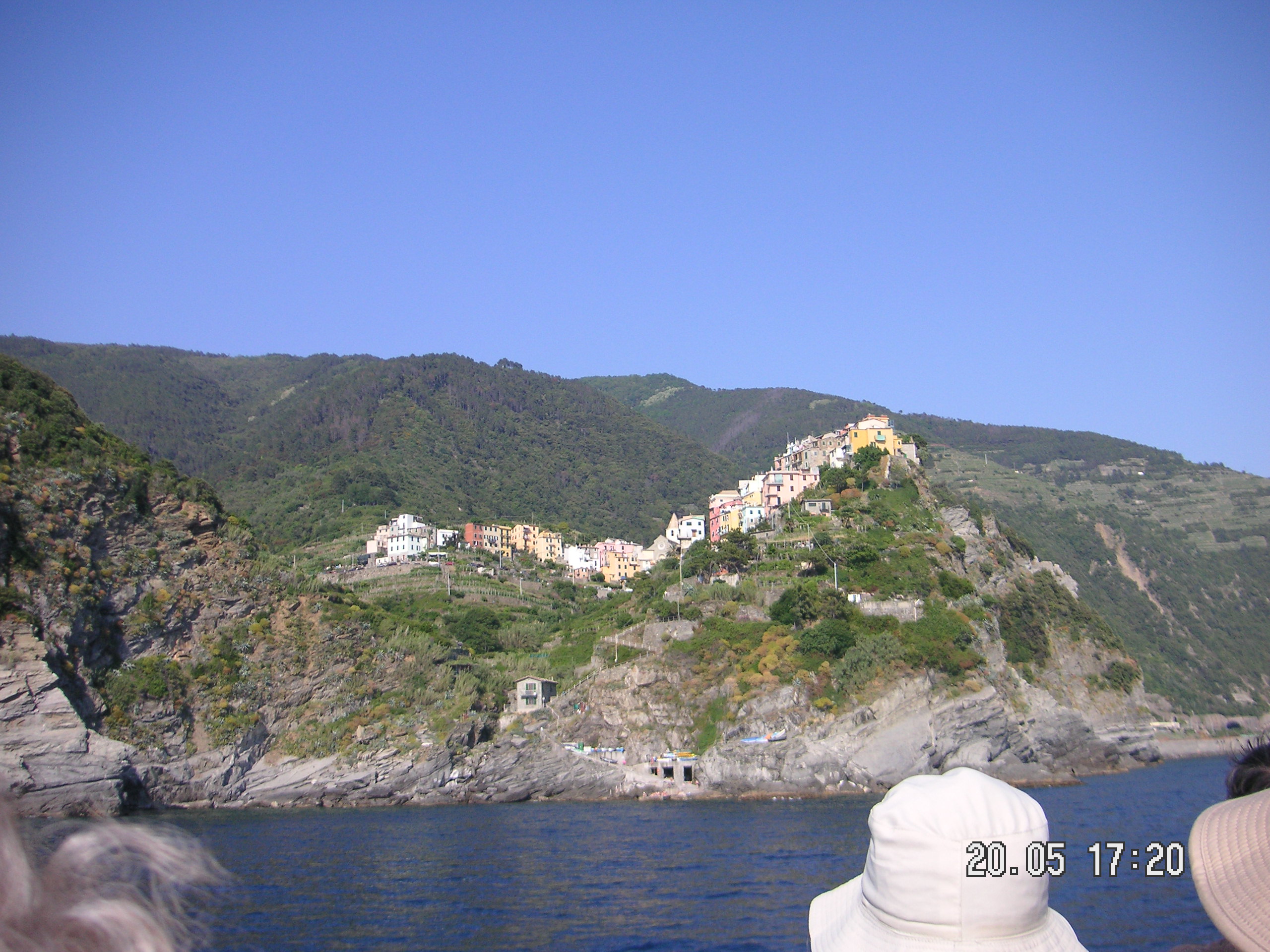
Four of the five villages are tucked into coves along a short stretch of coastline. Each has made its living from fishing and from cultivating the very steep slopes behind. The fifth village, Coneglia, is perched on a clifftop, two hundred and something steps up from the coastal footpath and its railway station.
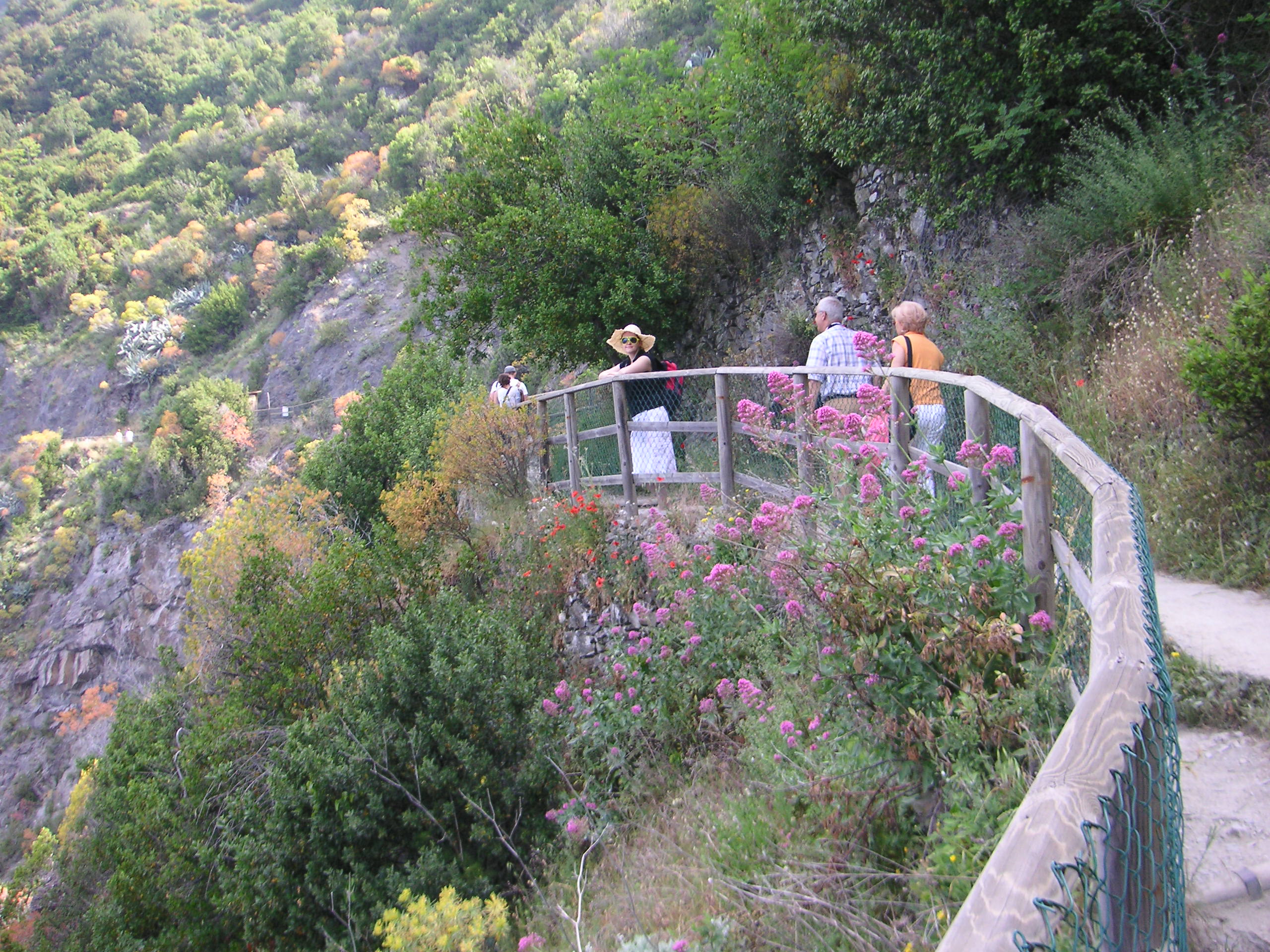
The only cars allowed are those of local residents. Tourists have to use the local train or boat services or the path to get from one village to another. It is a delightful area to visit. Walking in one direction and taking a boat back makes life easier, since some parts of the footpath are quite taxing.
The two villages worst affected by these floods are Monterosso and Vernazza. Monterosso is the first of the Cinque Terre when approaching from Genoa. Its anchovies have their own “appellation controlee” and it has a bigger beach than the others. Its station has a buffet with an amazing view of the coastline with all of the villages visible.

According to its mayor this beautiful little place has been almost completely destroyed.
People had to be evacuated by boat from Vernazza. Roads and the railway have been cut off by the mudslides, leaving the sea as the only viable access.
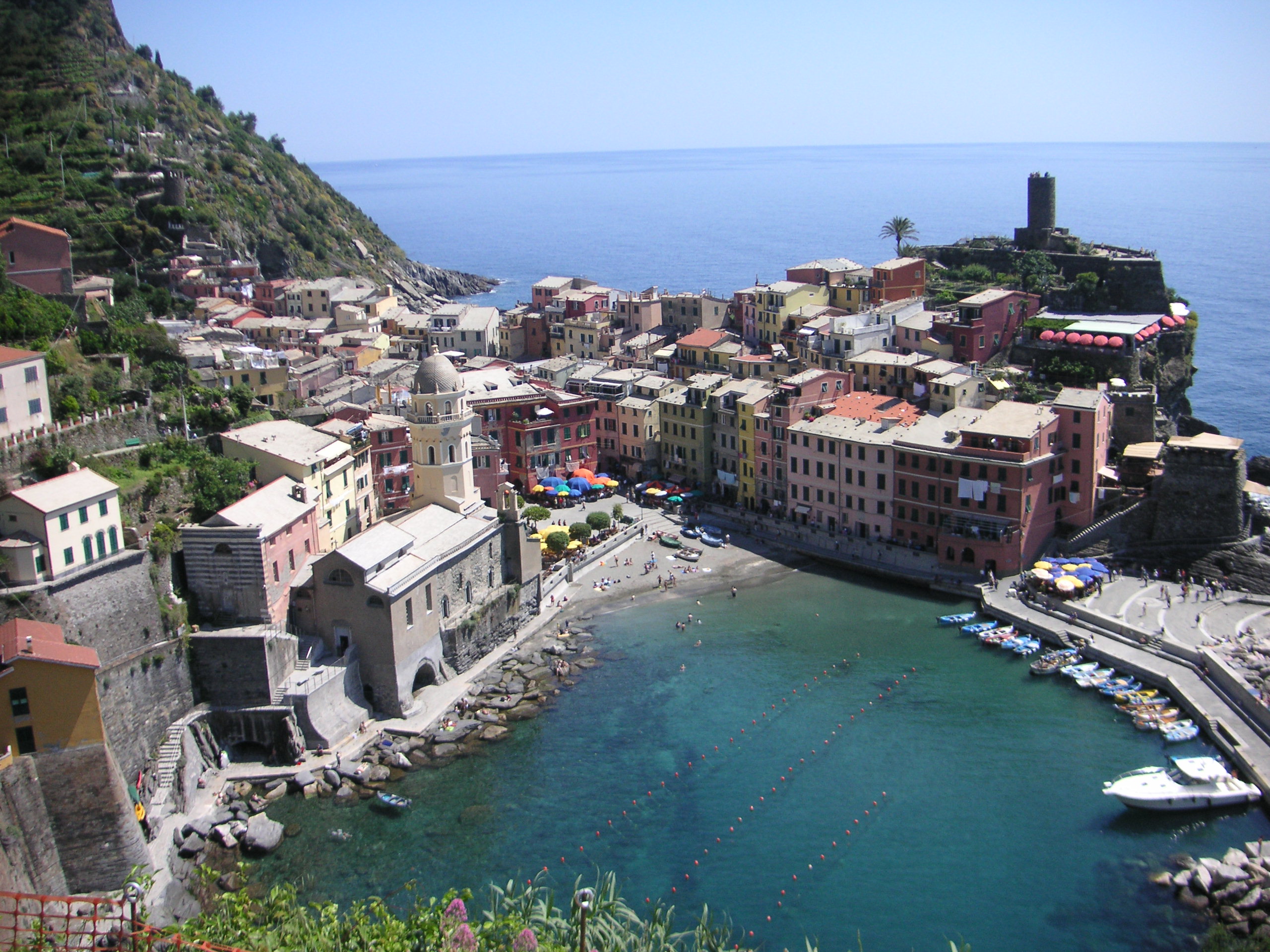 Vernazza, like each of the other villages, has its own character, built up over centuries of hard work. But it is easy to see how vulnerable they are to floods cascading down the mountainsides bringing mud and debris, destroying the carefully planted vineyards and gardens.
I can only hope that Monterosso has not been as badly damaged as first reports suggest and that these little paradises will soon be restored. At least the sea is there to make the work easier until road and rail links are once again functioning.
 Boadicea's Chariot
Staggering really where humanity lives.
Not my cup of tea, too claustrophobic but a shame it has happened.
I’m surprised those bastions have lasted quite so long considering that they are probably several hundred years old, the fact that the whole lot hasn’t slid into the sea is quite a feat of engineering in itself.
Yes, a lot of the buildings are hundreds of years old but with solid foundations built into the rock, Christina. I understand your feeling of being enclosed, but sitting facing the Med sorts that, preferably with a glass of Prosecco to help lift the spirits. As you say, it’s amazing what sort of life people can construct for themselves.
Thinking on about this , so many fishing communities cling to rock faces throughout the world.
Many down in deepest darkest west Wales, many in Cornwall and a good selection in the Canaries.
Never really been my bag, either the claustrophobia or the sea, miserable wet stuff! and generally grey.
I dislike the Med, smelly place at best and hideously overpopulated.
Give me the snow covered, tree rimmed, non populated mountains anytime, the only drawback is that you have to take your own bottle of wine!
I bet the lot above knew each others business, just like the Welsh. You couldn’t pass wind in those houses without your neighbour knowing! I’m the type that doesn’t even like seeing neighbour’s houses without jumping up and down on my own boundary and then only just!
I always rather fancied Iceland only 300,000 people and even more volcanoes, pity I never got there.
You might enjoy the Azores, Christina. Lots of uninterrupted views, although they are over thousands of miles of the wet, but not always grey, Atlantic. Quite a lot of volcanoes too. There’s even a little settlement at the bottom of the caldera on Corvo. Now that’s what I’d call claustrophobic. Each island is different and very proud of it. Not a great culinary experience, though I could recommend the red Basalto wine, but lots of plants in the wild and not a lot of people.
It’s looks as though it’s an incredibly picturesque part of the world, Sheona, but a tad precarious. I hope it is not too badly damaged, it would be sad.
Lovely to visit but I wouldn’t like to live there either; I prefer a little more space, but I love the sea.
I also visited this area two years ago. I recognise the places in the pictures. It is indeed a stunningly beautiful piece of coastline, and a tradegy that these centuries-old villages are now being hit by extreme weather.
It seems that we can expect a lot more extreme weather, according to Nature: http://www.nature.com/news/2011/110216/full/470316a.html
Evenin’ Sheona – Reminds me a bit of Mousehole (sorry, Araminta) in Cornwall which has suffered similar flooding problems in the recent past.
linkey thingy
OZ
Your mention of Mousehole reminded me of my only visit there. A long time ago, when we were poor students in London, we took advantage of a British Rail “Look & Book” trip from Paddington. Husband (to be) wanted to show me bits of England. We had a glorious sunny day in November, drinking mead and eating crab salad. A beautiful little place. A few months later we did another trip with some Aussie mates to Torquay where we hired a car and showed them Dartmouth. You spent a long time in a train, which at least made no stops, but it was worth it. I don’t suppose they do such trips any longer.
Hi Sheona. I have just seen this. I was away when you published it. I was in the area last year. My brother and sister in law have a couple of cottages up in the mountains in Torsana. We went to Lerici for the day, though not to Cinque Terre proper. It is very beautiful. Sad to hear about the rain damage.
I was also in the Azores, in the mid 80s. Very beautiful, but as you say claustrophobic, though not as bad as St Helena! That would send anybody crazy.